[104] HOW JUST ONE TREE CAN MAKE A DIFFERENCE
Trees.
We all love them right?
But how much difference can they actually make? Are we all just being conned into feeling like everything will be ok if we just plant a few more trees? And how do we as individuals and families living in your average 3 bed semi plant enough trees to make a difference?
Come and listen in to my chat with the awe inspiring Amanda Bronkhurst from Just One Tree to answer all of these questions and more.
Hear about:
- How Amanda went from TV ad producer to all round eco hero and tree planter extraordinaire, with a toddler in tow
- Amanda's 'ecopiphany' - the point at which she realised she had to do something to help fight the climate crisis
- How Just One Tree came about and what it does
- Loads of info about the amazing-ness (technical term) of trees and how they can help them planet
- The impact of 'Just One Tree' in just two years...!
- How we can get involved, including all the info about #JustOneTreeDay for schools in October (I've told Amanda I reckon we can get 500 schools signed up - will you help us out and invite your local school..?!)
I LOVE hearing people's stories - how they got started, and how perfectly ordinary people make extraordinary things happen. Amanda is such an inspiration for anyone who ever worries that as 'just one person' they can't make a difference.
Grab a cuppa, pop in your ear pods, and listen in to a life-affirming and uplifting chat that is guaranteed to make you feel better about the world - Enjoy!
PS. Super excited to announce that The Knackered Mums Eco Club has hooked up with Just One Tree, so that a tree is funded for every monthly subscriber for each month they're a member - we're up to 123 trees so far!


LISTEN...
Podcast: Play in new window | Download

CHECK OUT...
[103] “I GET SO OVERWHELMED”
In the Knackered Mums Eco Clubhouse, lovely Julia recently posted this:
"Just wondering how you all cope with not doing it all and not all at once. I get so overwhelmed with the differing things I could be doing it seems like nothing actually gets done."
Oh wow. I can relate to this - can you?
I'm super aware of just how overwhelming it is to think about the climate crisis, and I think it's something that maybe stops lots of us getting started and taking action.
And then when we do start, when we open the can of worms, we can often wish we hadn't as it can very quickly feel even MORE overwhelming!
So many things to think about that we hadn't really considered before, so many different opinions and options, so many things we apparently 'should' be doing.
The climate crisis IS overwhelming.
It's the biggest issue facing us as a humanity.
The choices we make today will impact the earth and it's inhabitants for generations to come.
And we're running out of time.
No pressure then...
Here are my top tips for dealing with (climate) overwhelm...
Enjoy!

Podcast: Play in new window | Download
How do you deal with overwhelm and that feeling of wanting/needing to do All The Things All At Once?
Let me know!
"Easily the most family friendly way to do your bit"
The Sunday Times
[102] PALM OIL 101
Today we're talking palm oil...
The viral banned (too political apparently!) Iceland advert of Christmas 2018 highlighting the impact of palm oil on rainforests and the wildlife that live there really thrust palm oil into the spotlight, and I think we’re all aware now of the issue, but knowing what’s the best thing to do is another kettle of fish entirely. Should we be trying to avoid it?
Or look for sustainably sourced palm oil? Or is there no such thing?
Can we trust the certifications?
It’s a minefield and one that quite often makes me want to hide under the duvet with a bar of palm oil free chocolate although I would just worry that that wasn’t the right type of chocolate to choose.
Luckily today I got a belter of an episode, with Cat Barton and Faye Sherlock from Chester Zoo. Naively it never really occurred to me that zoos would have people working at them other than the staff on the ground at the zoo, so it was fab to hear about Cat’s role as a Field Conservation Manager working with communities in Sumatra and Borneo around palm oil, and Faye's job at the Sustainable Cities Project Officer.
It’s safe to say that they’re both pretty clued up about the impact of palm oil on rainforest regions, and then importantly, what we can do as individuals and communities at home to help.
I’d love to hear your thoughts on this one.
Has it changed your mind about how you approach palm oil?
Are you inspired to look into becoming a sustainable community, workplace or school?
Let me know in the comments!
Enjoy!


Podcast: Play in new window | Download
Useful links
THE POWER OF YOU…
It's very very easy when thinking about the climate crisis to feel powerLESS. HopeLESS. Too small to make a difference.
But we are more powerful than we know, and certainly more powerful than we give ourselves credit for.
I'm a massive believer in the power that we have as individuals to create positive change, so I absolutely LOVED hearing Sandra Sydow who runs a project called Climate Pitch, talking about the 4 different types of power we have as individuals. In fact, I loved it so much I asked her if she would mind me sharing it. Thankfully she said yes, and I've been using it in talks ever since, and wanted to share it with you all today.
We don't need to wait for government and business policies to get onboard before anything changes.
WE can be driving those policy changes, and much much more.
Here's how...
Our power as consumers
Some people, understandably, dislike being labelled as consumers. I'm not saying it's our sole role/purpose by any means, but we live in a very consumerist society, and one of the things that we all do as part of our daily lives is buy and consume. Whether it's clothes, food, tech, books....
And this is where a lot of our power can lie.
I have no idea how accurate this figure is, but a quick Ecosia search comes up with a stat that we can make up to 35,000 decisions every day. In the words of Anna Lappe, ""Every time you spend money you're casting a vote for the kind of world you want."
Our choices matter.
If we buy less fast fashion, more organic food, if we repair instead of buying new, or refuse to upgrade each time Apple tells us to, retailers will have to start to respond.
That's not to say we have to make the perfect decision every time. No one can do that. It's more about recognising the power that our buying choices can have (even the really dull, mundane ones about what loo cleaner to choose) and making better decisions more of the time.


Our power as citizens
In addition to the power of our choices, we also have the power of our voices, and this is another one that we underestimate.
- Use your citizen voice - ask for better, demand change.
- Vote.
- Be that person who writes to your MP, or your local council.
A study in 2017 asked MPs why they weren't taking more action on climate change, and most MPs said that they weren't hearing that it was an issue from their constituents. Let's change that.
- Tweet brands and retailers to let them know if you're not happy with something (and indeed if you're really happy with something!).
Our power as influencers
Influencers aren't just people who swan around looking beautiful on Instagram sharing lots of #ads and #sponsoredposts.
We are ALL influencers.
Our own behaviour affects those around us. Just by showing up and 'being the change' it gets seen by other people. And we never know the ripples that we create when we change one thing. When we have one conversation. When we share one social post.
Sometimes I think we (I) have a tendency to back away from conversations about what we're doing and the journey that we're on, for fear of coming across as though we're judging people, or maybe even a fear of being judged.
Show don't tell.
Step into your influencer status.
Share your own journey and story.
You can and do inspire change in others.


Our power as change agents
I LOVE this 'label' - doesn't it sound great? And like we should all have capes and some kind of secret handshake?
The idea is that we all the potential to effect change in the organisations that we are involved with. Be that our workplaces, the kids schools, any sports groups we're involved with etc etc.
By asking questions about pensions, or recycling. Or maybe we step up and we're the ones who suggest that there should be a 'green group' and galvanises colleagues to get involved. Or maybe simply suggest trying a fairtrade brand of coffee.
There's a huge amount of potential to 'be the change'.
For example...
Let's say there's a brilliant blog that you read that shares the suggestion that moving your energy supplier to a renewable tariff might just be one of the most impactful things we can do as individuals (sounds like a brilliant blog, do share it with your friends...)
So you decide that you're going to bite the bullet and do it.
You make a consumer choice. You vote with your wallet, and you take your money away from the fossil fuel guzzling planet burning company, and give it to the lovely renewable company where baby animal gambol through the wildflower meadow hand in hand.
THEN you can write to the company you left telling them why.
AND you could also write to your MP asking why subsidies still exist for fossil fuels.
THEN you share your joy, excitement and smug-ness as your new planet saving super hero status with friends and family and on your social media feeds. With or without the discount code you've been given to share.
And as if that's not enough, you skip into work the next day and ask where your work gets their energy from, and if they would consider switching to a renewable tariff.
Before sitting down with a nice cup of tea and a biscuit whilst you polish your secret change agent badge.

What do you reckon - do you love this as much as me?
Let me know in the comments!
[101] THE POWER OF YOU
I talk a LOT about the changes we can make as individuals and the power that we have to create real, meaningful change. I talk about the power of our choices, and the power of our voices. But during a recent chat with a brilliant lady called Sandra Sydow from Climate Pitch, she talked about the four areas where we have power and I LOVED this! So much so that I asked if she'd mind me sharing it, and luckily she said yes!
Listen in to here about the power we have as:
- consumers
- citizens
- influencers
- change agents
Have a listen - I hope it leaves you feeling as energised and inspired and motivated as it did me! Let me know in the comments.
Enjoy!

Podcast: Play in new window | Download
Useful links
What do you reckon?
Do you love this as much as me?!
Let me know!
"Easily the most family friendly way to do your bit"
The Sunday Times
[100] ASK ME ANYTHING
Episode 100!
How did that happen?
I’m the least planny ahead planning type person, so it only occurred to me to start thinking about what to do for this episode a week or so ago. Short of having Greta or Sir David Attenborough on, I was short on ideas for what I could do to mark the occasion. So I asked the audience. Or more specifically, my audience, you guys, on social media.
And you all said that you wanted to hear from me. Actually, that’s a lie, several people did indeed suggest Greta and Sir David, along with Chris Packham and a few others, but given the timeframe and my lack of celebrity contacts, I went with the next most popular suggestion which was to hear from. Which feels pretty excruciating if I’m honest.
So I asked for questions that you wanted to ask, and then decided that rather than listen to me drone on asking myself questions and then answering them, it might be more interesting if we had a couple of guest presenters.
Enter Kate (who runs The Full Freezer - check out our podcast chat here) and Laura (who blogs at Eco'ish Laura), recruited from the Knackered Mums Eco Club, who gamely jumped on Zoom and did a brilliant job of sifting through the questions and asking them.
I find the concept of an episode all about me toe curlingly awful, so I really hope that this is interesting for you guys to listen to – do let me know, and let me know what other questions, if any, you’ve got for me and I can save them up for the 200th episode!
A massive thank you to each and every one of you, for tuning in , for sharing the podcast, for rating and reviewing it, and most of all for listening and getting in touch to share the actions that you’ve been inspired to take after listening – it really does make it all worthwhile.
I’m taking a short break now over Easter, but will be back in a few weeks time to make a start on a whole new centenary of episodes.
Here's the questions:
- How did the first book come about?
- What do you find hardest about living sustainably and how do you tackle it?
- What keeps you going?
- How do you deal with any criticism around the 'ish' not being enough?
- What do I think about the ripples I create, and what's the biggest one?
- When did you know that The Knackered Mums Eco Club was a 'thing'?
- How do you feel about reaching 100 podcast episodes?
- What are your top tips for speaking to others and getting them engaged?
- What are my favourite 'non-individual' projects I've seen?
- What do my kids think of my job?
- Who do I want to talk in the next 100 episodes and if money and footprint were no object who would I want to have on?
- What is your biggest 'ish'?


Podcast: Play in new window | Download
Useful links
- The Sustainable(ish) Guide to Green Parenting
- My Make Do and Mend Year ( our year buying nothing new)
- The Climate Pitch
- Parents for a Future
- Me on the Motherkind podcast with Zoe Blaskey
- Sustainable(ish) Online Festival
- [082] - Secret Superheroes - a cup of tea with the Knackered Mums
- Me on the Sustainababble podcast
- Podcast with Ric Casale from Carbon Copy
- Community Fridges
- Frome Share Shop
- The Library of Things
- Repair Cafes
- The Party Kit Network
- Stacey Dooley's Fashions Dirty Secrets
- Jools Oliver on the Wear 'em Out podcast
- 10 things I do that make me a rubbish environmentalist

Gah! Was that as toe-curling for you as it was for me?
What other questions have you got?
Let me know!
"Easily the most family friendly way to do your bit"
The Sunday Times
SUSTAINABLE(ISH) EASTER EGGS
And that can only mean one thing. Chocolate! (Before you e-mail angrily, I know that Easter is about more than chocolate. Who could forget hot cross buns..? 😉 )
As with all things though, chocolate has it's dark side (and I'm not just talking cocoa content - see what I did there). I've not been brave enough to watch it yet, but there's a chocolate episode in the Netflix series Rotten called 'Bitter Chocolate' - the episode info says "the long journey from bean to bar is packed with misery" - which isn't really something we think about when it comes to chocolate.
And then with Easter eggs there's also the mountain of packaging to take into account I'm fully aware that there are lots of people far more organised than me who may have already bought and stashed their Easter eggs so this info may well be too late. But I hope that there are also others who are like me and a little less organised and also concerned that any Easter eggs that are in the house for too long will be scoffed at times of stress before being gifted...
Here's a few sustainable(ish) options:
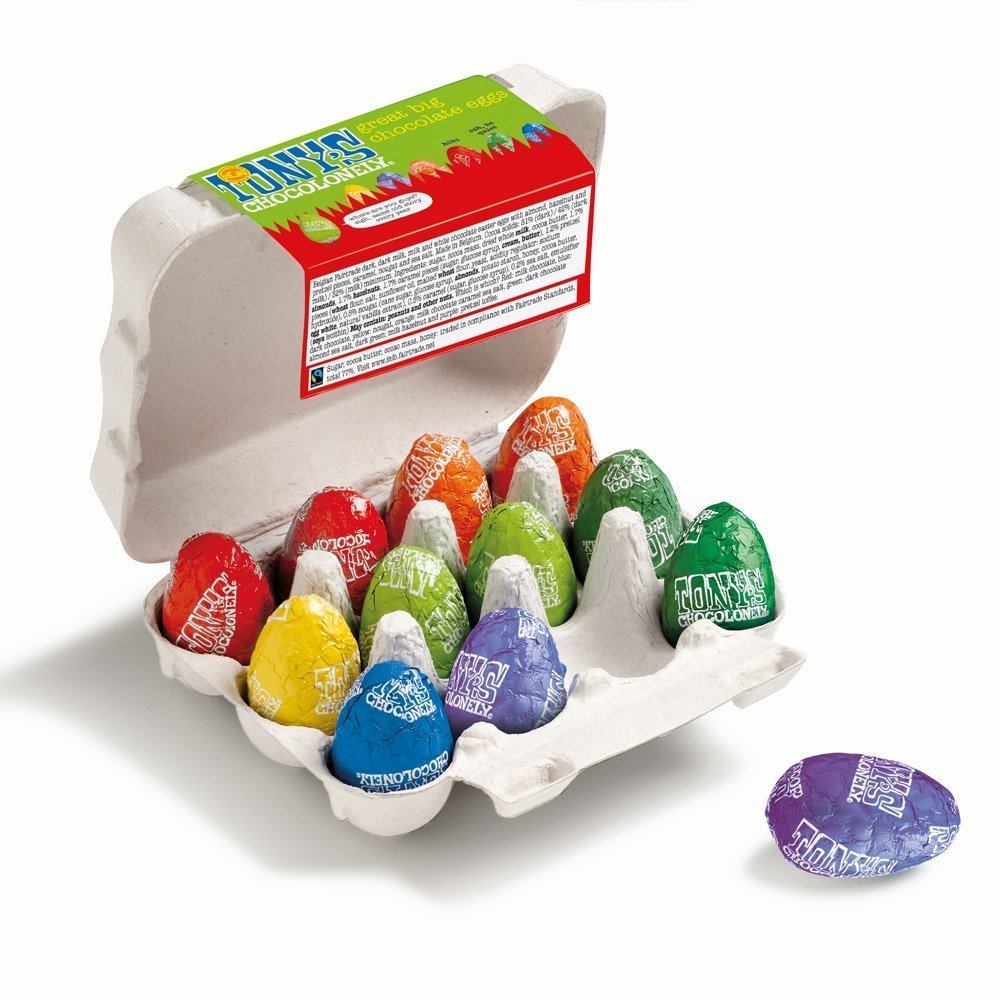
Tony's Chocolonely
Tony's are one of the good guys when it comes to chocolate. There was a bit of a hoo-hah in the press recently, but essentially they're doing good stuff, and working really hard to expose and eradicate slavery in chocolate supply chains.
And it tastes AMAZING!!
They have a special lemon meringue Easter bar, as well as some super cute (but they are quite tiny!) foil wrapped eggs in different flavours.
You can find them online, at Sainsburys and Waitrose stores, and at lots of zero waste shops.
Chococo
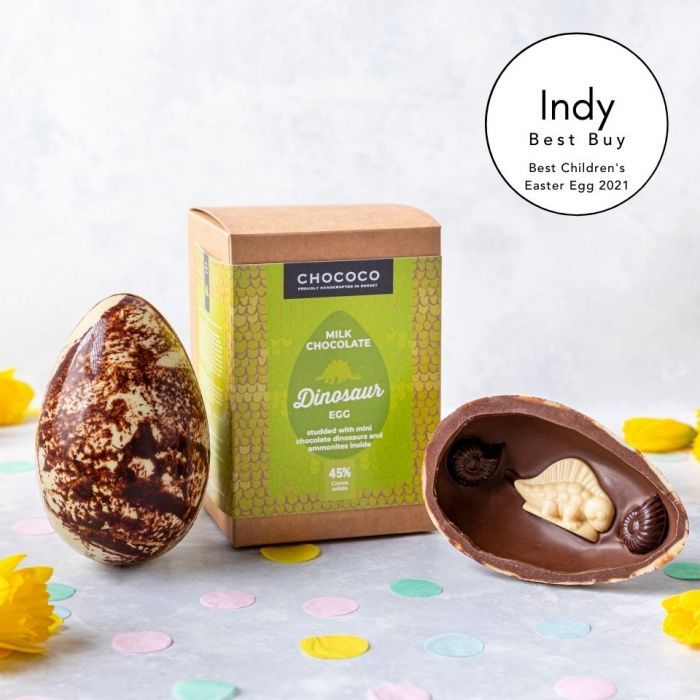
An independent brand, based in Wareham on the South Coast, working closely with cocoa growers and producers, to produce quality chocolate in recyclable and compostable packaging.
I've ordered the kids one of these dino eggs each from their Easter range, and will obviously be sampling the chocolate for quality control purposes...
Cocoa Loco
"Handmade, Organic & Fairtrade Chocolate made with love in Sussex".
These guys tick a lot of boxes!
They've got a brilliant Easter range and their packaging is plastic free and compostable.

Divine
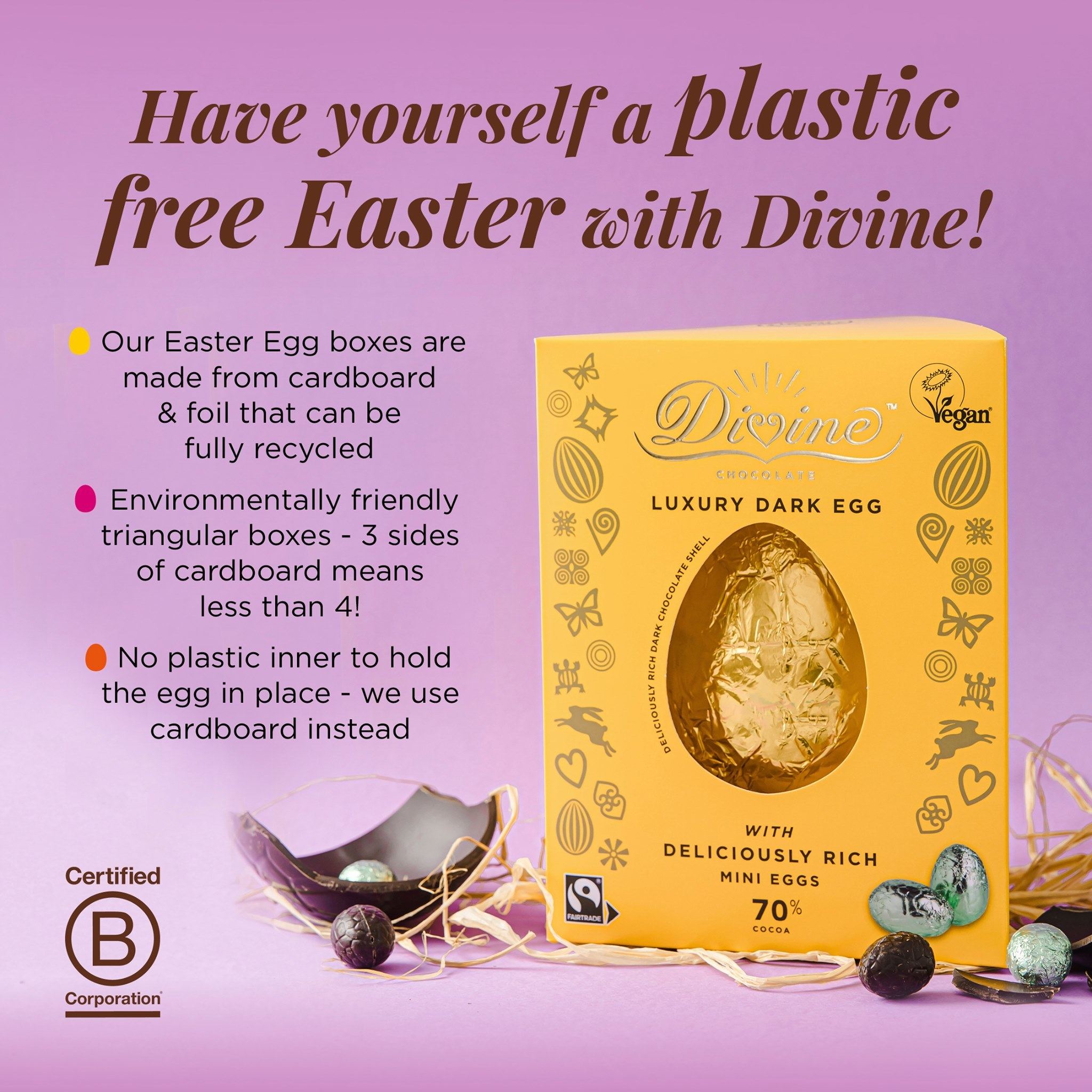
Divine are a well known brand, and their chocolate and eggs are pretty widely available in many UK supermarkets.
Their range of Easter eggs are plastic free and palm oil free.
Co-op
Co-op have introduced a range of plastic-free and Fairtrade eggs that look pretty delicious!

Moo Free
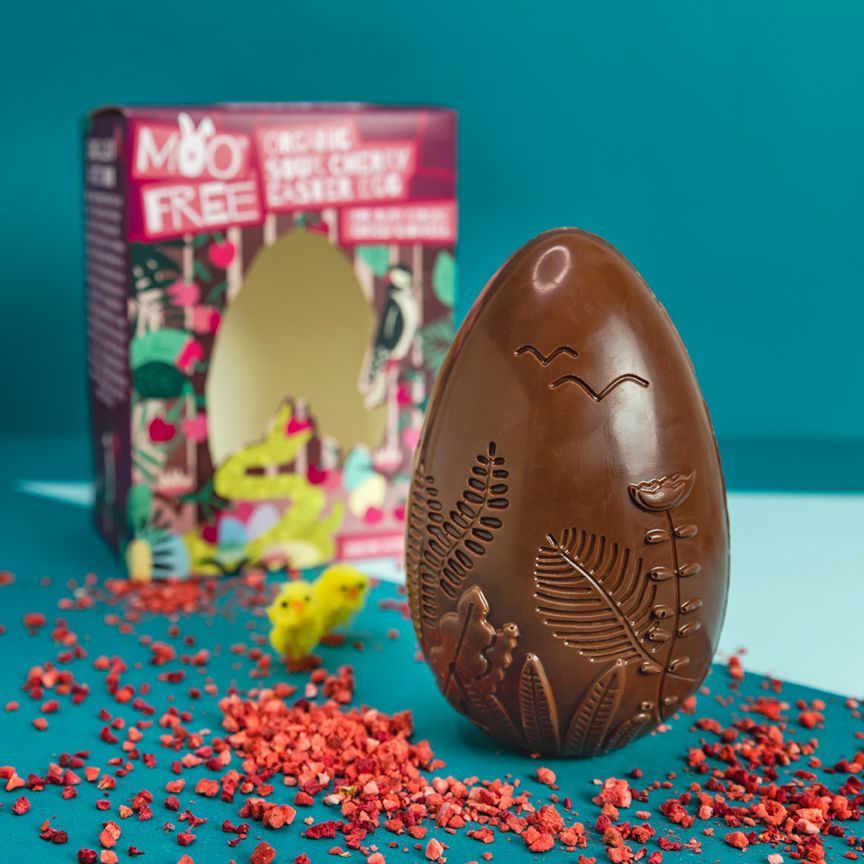
Moo Free are dairy-free, gluten-free, soya-free and vegan. And their packaging for their Easter eggs is plastic-free too!
Forest of Hope
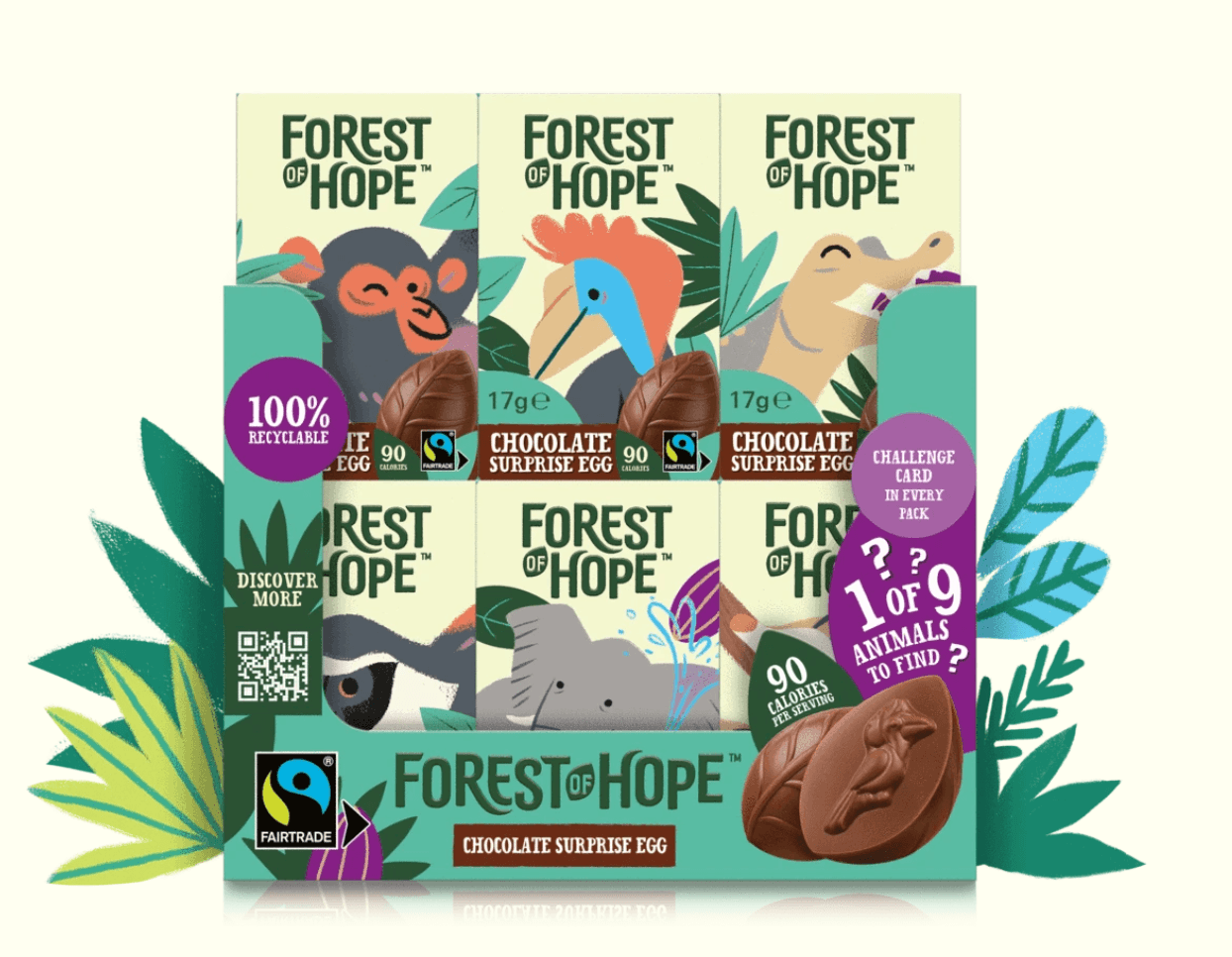
Check out these ethical alternatives to Kinder Eggs!
Available online and also now at Co-op stores, these miniature eggs come with a fairtrade and palm-oil free chocolate animal shape inside, some fab animal facts and an activity to do!
(If you click on the website, it does a weird thing where it asks you to enter your date of brith for some reason - don't panic, it's not a spam site!)
Hopefully that's more than enough to keep you busy
scoffing chocolate with a clearer conscience at Easter!
[099] COMPOSTING 101
Episode 99! How did that happen? And what on earth should I do to celebrate/mark the occasion? Get in touch to let me know what you’d love to hear for the big 100 – drop me an e-mail on jen@sustainableish.co.uk
Today’s episode is an absolute cracker.
Whoever knew composting could be so interesting?!
It’s genuinely like magic. I still don’t really understand how it works (it genuinely is magic) but after chatting with the amazing Catherine Howells from Barefoot Kitchen I now feel a little less like it’s this kind of dark art full of smoke and mirrors. And importantly, less like I’m cocking it all up. Or at least, if I do cock it up then it’s really not the end of the world.
I thin I could easily become a composting geek (although in reality I’m probably way too lazy) and I can see why people can become obsessed with their compost – Tyson who is in the Knackered Mums has even named hers – I love it!
In my head it was this really complicated process, and there seemed to be lots of different types and methods of composting, but Catherine is so practical and down to earth and cuts through all the unnecessary BS and takes us back to basics, making it feel very very do-able for even the least green fingered of us.
Enjoy!
PS. Using all of Catherine's brilliant info, I've put together a beginners guide to composting which you can find here.


Podcast: Play in new window | Download
Useful links
- Barefoot Kitchen
- Website
- Facebook
- Instagram - The absolute beginners guide to composting (blog post)
- A beginners guide to wormeries (blog post)
- Everything you ever wanted to know about wormeries (podcast)
- The Urban Worm
- How to garden the low carbon way (podcast)

Do you compost?
Does it feel a bit more do-able after listening to Catherine?
Let me know !
"Easily the most family friendly way to do your bit"
The Sunday Times
THE ABSOLUTE BEGINNERS GUIDE TO COMPOSTING
Composting...
Who ever thought aged 18 that they would find themselves (excitedly..?) reading a blog post on composting hey? Yet here we are - oh how are lives change...!
That's not to say that composting isn't exciting. As I'm discovering, it very much is. But I thought for a long time that it was a pretty niche interest, something that only full on gardening geeks could or would get excited about. But I have been proved wrong, and it appears that the thirst for composting knowledge is strong.
This is written by a beginner, for a beginner.
I wanted to put together something that a complete newbie could come along to and hopefully find the answers they need, in a jargon free and easy to access way. Composting can feel like a bit of a dark art, and really complicated. But as you'll hopefully discover, it's really pretty simple, and as with most things, we just need to let nature work her magic.
As I'm very much a crap gardener and a very novice composter, this post is essentially a written down/bullet pointed version of Episode 99 of the podcast with the very brilliant Catherine Howell from Barefoot Kitchen - she's the composting Queen!
Why should I compost?
Composting is basically a way of recycling garden and kitchen waste (more on what you can put in there below) into ermmm, compost! So taking all the nutrients in the 'waste' and turning it into something useful that can be used in your garden to help stuff grow.
How does it work?
Kidding. Well, actually not. It is magic, but it's 'nature's magic'. We're essentially helping nature to do her thing a bit more quickly.
So the waste gets piled up, heats up, and the bugs and bacteria and enzymes that exist naturally get to work and start breaking it all down. Essentially what they're doing is eating it, and then pooing out nutrient rich soil. See, magic!
I've heard people talk about hot composting and cold composting - what's the difference? And what about bokashi? And wormeries?
Cold composting
Is basically your regular compost heap - it can literally be a pile in the garden, or a plastic 'dalek' type bin, or made from pallets, or anything in between.
It's mostly used for garden waste, and you can also put things like veg peelings and teabags etc in there.
Hot composting
Is a specially insulated compost bin that heats the compost to a huger temperature, meaning that you can put cooked food waste and meat etc in there as well as garden waste.
Bokashi bins
Are a different kind of magic - they kind of pickle the food waste meaning that you can then put kitchen waste in a regular compost bin.
Wormeries
Are special bins or containers with worms in! They tend to be used more for food waste, rather than garden waste.
Cold composters
These are your regular bog standard compost bins.
- What do I need?
The simplest version can just be a heap (a literal heap) of garden waste in your garden - ideally about a metre cubed in size.
If you fancy a more contained version, then there are about a gazillion different types and designs out there - from the bog standard black plastic 'dalek' bins that many councils give out, to fancy pants wooden ones in the shape of beehives, to ones on legs that you can roll like a massive compost tombola - take your pick and pay your price!
The idea size is about a metre cubed, and ideally a lid is a great addition. - Where do I put it?
The ideal place in a sheltered yet warm spot, on well draining ground.
However, as Catherine points out in the podcast - the best place is actually the place that's easy to get to and where it's actually going to be used. If you've got to trek to the bottom of the garden every time the food waste caddy is full, you're much less likely to bother. - Can it go on concrete?
Ideally it should be on bare ground (soil) as this helps any liquid to drain away, and bugs and worms to get in and work their magic.
Having said that, Catherine says that one of the best compost bins she's ever seen was on the balcony of a first floor flat. And it still had worms in it (go figure?!) - What can I put in it?
Garden waste
Uncooked food waste (vegetable and fruit peelings
Tea bags (ideally plastic-free) and coffee grounds
Shredded paper and cardboard
Bamboo toothbrushes (minus the bristles), cotton buds with paper/wood stems etc etc.
Straw and poo from herbivore pets eg rabbits, chickens etc. - What can't I put in it?
Avoid cooked food and meat or fish.
Poo from carnivores (cats and dogs).
The temperatures in a regular compost heap don't get hot enough to kill any pathogens, and you could also get a problem with rats. - Can I put compostable packaging and bags in there?
Great question and it's a really murky/tricky one to answer.
'Compostable' and 'biodegradable' aren't legal terms, and often don't mean what we might they do. Biodegradable just means it will break up into smaller pieces - so potentially just seeding your compost with microplastics. 'Compostable' usually refers to industrial composting conditions which are carefully managed to provide the correct heat and conditions for the 'thing' (bag/packaging/cup etc) to break down. It's important to look for things labelled 'home compostable' to be really sure - and then it will still break down better if you chop it up into smaller bits. - What's all this about ratios and brown and green waste?
This is where it starts to feel a bit complicated and thankfully Catherine does a brilliant job of de-complicating it in the podcast.
Brown waste is the dry stuff - so dry leaves, twigs, small sticks, straw, shredded paper, cardboard etc.
Green waste is the wet stuff - so fruit and veg peelings, soggy leaves etc, grass clippings etc.
Ideally we're aiming for a 50:50 mix of brown(dry) to green(wet) to give our compost the best chance of doing it's thing. - Is there any maintenance?
Giving it a regular 'turn' will help to keep the conditions aerobic (ie with oxygen).
Without enough oxygen, the conditions in your compost could end up being anaerobic (without oxygen) meaning your compost will ferment, and essentially becomes a little mini landfill site in your garden, emitting methane and other greenhouse gases - not really what we want.
Getting in there with a garden fork to turn it around and create some air spaces is the easiest way. Although when I say easy, it still sounds like a bit of a pain in the butt to do. Catherine advocates taking the outside off, moving it along a metre and then shovelling it all back in again once a year. Again, sounds like a massive pain to do, but at least it's only once a year!
You can get 'tombola' style containers that you can rotate and roll, which sound great from an aeration perspective. However I'm not sure how the bugs and worms get inside? - What's all this about weeing on your compost heap? Is someone winding me up?
No apparently not! It's a thing. Sometimes when compost heaps slow down or stop working, they need a nitrogen boost. And the most convenient, cheapest and eco-friendly source of that is, you guessed it, pee! - What comes out the bottom?
Compost! It should be dry and not smelly if you've got the mix right and kept it well aerated.
- What can I do with the compost?
I naively thought that if I could make enough, then I would be able to use my homemade compost in pots and for growing veggies etc in the place of shop bought compost. Sadly this isn't the case. Apparently our homemade compost will be too strong for seedlings.
There are two main options:
- Spread a thin layer on top of your flower and veg beds to provide a lovely nutritious boost.
- Look online for a compost recipe that tells you what else you need to add to your homegrown compost to create potting compost. - My compost is smelly and slimy
It's probably got a bit anaerobic and a bit wet - give it a good fork around and add some dry/brown material like shredded paper or dry leaves or cardboard - My compost is really dry
Add some wet/green material, or even a bucket of water. Or wee on it. - What about flies?
Flies are kind of a given around compost heaps in the summer. One thing you can try is having a bit of cardboard that you place back on top after adding new material. - What about rats?
I think this is something everyone worries about. According to Catherine, rats don't like noise or movement, so she gets her kids to regularly hit her compost bins as they're going past!
Hot composters
We've got one of these, called a 'Green Johanna'. Our council subsidises them for local residents as they don't provide a food waste collection (grrrrr!).
All the same rules apply as for cold composting above.
EXCEPT....
You can put cooked food, and meat, dairy and fish in them.
We use it for all of our food waste, as well as the chicken poo/straw, grass clippings etc. After chatting to Catherine I've now realised why it's so slimy - we need more brown/dry waste in there, so I'm eyeing up any old newspapers, shredded paper etc to add in.

Our Green Johanna
Bokashi Bins
We tried these years ago (pre-kids) when we had a teeny garden and weren't really producing any garden waste. I obviously didn't do my research properly, as I naively assumed that the bokashi magic bran would break down all of our food waste into compost, in the bokashi bins. So I was very taken aback to open our bins after 3 weeks and find everything looking pretty much intact.
- How do they work?
This is a different kind of magic, that involves a special bran that pickles or ferments the food waste. - What can I put in there?
All of your food waste, including meat, dairy, fish and cooked food. - What comes out at the end?
Pickled/fermented food! And a liquid that you can use as a plant feed.
The fermented food waste shouldn't smell, and can be added to a regular compost heap, or buried in your garden. If you don't have a compost heap, you might be able to find someone who does who would be more than happy to take your pickled food waste (see below).

Pic Bokashiliving.com
Wormeries
I love a wormery - they're great projects for kids, and they work really well if you want a way to deal with your food waste and haven't got space for a garden or compost heap.
- What can I put in?
Food waste - chop it up into 1-2cm cubes (apparently worms only have small mouths!)
Cooked food eg small bits of bread etc
Dog and cat poo - What can't I put in?
Citrus fruits
Oily and spicy foods
Meat - they can eat meat but it will encourage flies - What comes out?
Worm wee and poo! The worms produce a liquid which you need to drain off, and can dilute to use as plant food. The worm 'poo' is dark, rich, crumbly goodness, which you use in the same way as you would compost above. - There's loads more wormery info in this blog post here, and this podcast episode with Anna from The Urban Worm.

Phew! What a beast of a post!
I hope it's helpful - do you feel more able to make a start composting now?
What have I missed out?
What questions have you still got?
[098] ECO SCHOOLS
To celebrate and mark the launch of The Sustainable(ish) Guide to Green Parenting, my new book, coming out this week, there's a little flurry of five parenting(ish) podcasts coming your way this week!
Check out episode 93 for some more info about the book, Monday's episode with Ellie Jackson from Wild Tribe Heroes, and Tuesday's episode with Rachel Boyett from Little Veggie Eats, Wednesday's episode with Charlotte from thelittleloop explaining how clothes rental for kids works, and yesterday's episode on all things reusable nappies with Laura Tweedale!
So here we are them day 5! It’s been a real blast, and we haven’t even skimmed the surface of a LOT of sustainable(ish) parenting, bit I hope you’ve enjoyed the episodes this week – parent or not, these women are all hugely inspiring and so brilliantly demonstrate the power we all have to create positive change.
To round off the week we’re heading back to school!
Unless you homeschool (and the last year has demonstrated to me that I am really not cut out of homeschooling and I take my hat off to those of you who choose to do that) our kids will (Covid permitting) spend a lot of their time at school. Schools can have a huge impact, not only in teaching our kids about the planet and the climate crisis, but in connecting with the wider school community and making wider change happen as well.
I LOVED this chat with Lee Wray Davies, who is the Eco Schools Manager for England, about the Eco Schools programme, what it is, how it works, the impact it has, and how we can get our own schools involved.
Enjoy!

Check out Lee, hanging out with Sir David Attenborough!

And here she is with Steve Backshall! Anyone else want Lee's job..?!!
Podcast: Play in new window | Download
Useful links
- Eco Schools
- Global website
- Eco Schools England website
- Eco Schools England on Facebook
-