
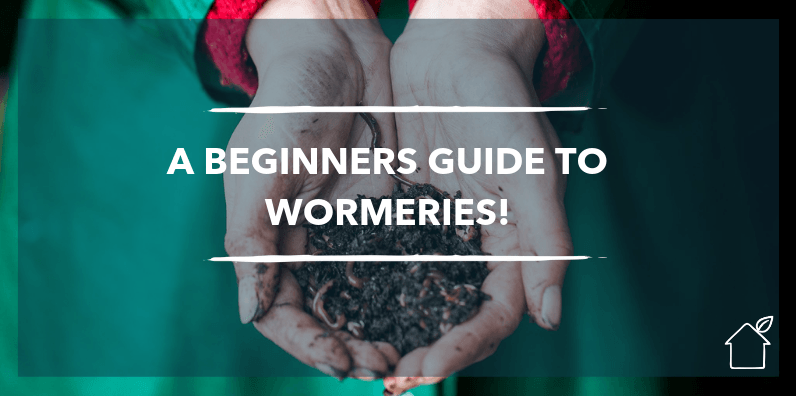
A BEGINNER’S GUIDE TO WORMERIES
Did you know...?
- We only have around 30- 40 years of fertile soil left in the UK?
- And globally optimistic estimates are around 60 years?
- 98% of our food comes from the soil?
- If food waste were a country it would be the third biggest emitter of greenhouse gases behind the USA and China?
The answer though is simple. And according to Anna de la Vega from The Urban Worm and guest on the Sustainable(ish) podcast (check our chat here), it’s worms.
Worm farming is a double whammy – it’s a brilliant way to deal with our food waste (which if sent to landfill releases methane and nitrous oxide, both of which are highly potent greenhouse gases) AND it creates amazing quality compost containing all of the essential nutrients that plants need to grow which is super concentrated meaning you only need small amounts.
In lots of countries it’s being done an industrial scale, but here in the UK we are lagging behind a little (no doubt been distracted by a certain B word…).
But worm farming is something that we can all do on a household scale, even if we don’t have a garden. We can use our little worm pets to munch away on our food waste, so a worm farm is an ideal solution to food waste if you don’t have a council food waste collection and don’t have a garden for a compost bin.
And it's easier than you might think.


How does a worm farm work?
Basically, you feed the worms, they poo, and the poo they produce is in fact super rich compost.
The 'vermi-compost' (worm poo, but it doesn't look or smell like poo, it looks like rich soil) is the strongest natural fertiliser there is, a natural insecticide, contains heaps of beneficial micro-organisms to aid soil health and fertility and contains all the nutrition that plants need to grow. It's sometimes referred to as 'black gold'.
Why might I want to get a worm farm?
- If you don't have a kerbside food waste collection, you can put all your food waste (with a few exceptions, see later) in there meaning it's not being sent to landfill and contributing to the climate crisis.
- If you don't have a garden or a garden big enough for a compost heap, a worm farm is a great option for dealing with your food waste.
- If you have a dog or a cat, a worm farm can be used to compost their poo.
- The worms produce super concentrated compost for you to use on your garden and plants
- You get hundreds of new friends!
What's the cheapest way to get started?
The absolute cheapest way to get started is to make your own worm farm. Anna at The Urban Worm has a great guide on her site that shows you how to DIY your own wormery from two 10L plastic buckets. She also has a kit that means you can convert an old wheely bin into a worm farm too!
What the easiest way to get started?
There are a whole different variety of 'ready made' womeries around, ranging from the small and simple, through to the beautifully chic and stylish!
Have a look at:
Do I need a garden?
No! That's one of the beautiful things about wormeries - you can have them anywhere, including indoors, so they are an ideal solution for food waste if you don't have anywhere to compost.
Will it smell?
No! A healthy wormery shouldn't smell.
If it does start to smell, it's a sign that the worms aren't very happy. It could have got too wet, too 'anaerobic' (ie needs more oxygen) or you could have overfed your worms.
Do I need special worms?
In a word, YES. You need special red composting Tiger worms.
If you already have a compost heap, you should find that you have a healthy population of red worms squirming around in there, and you can 're-home' some of these. If you have a friend with a wormery they might be happy to gift you some.
Other than that you'll need to buy some from somewhere like Yorkshire Worms.

20L worm farm kit from The Urban Worm

DIY Wheelie Bin Wormery Kits from The Urban Worm

10L mini worm farm kit from The Urban Worm
How many worms do I need?
This will depend on the size of your wormery. In her 10 and 20L starter kits, Anna supplies 100g of worms. For a 120L slimline wheelie bin wormery she recommends 1kg. So anywhere between the two, depending on the size of the home you're going to put them in. A 40L worm farm is idea for a two person household and should be able to deal with all of the food waste created.
What do I feed them?
Worms will eat anything that 'has once been alive' but there are a few do's and don'ts for happy worms:
How often do I feed them?
Little and often is better than a big 'dump' every now and then. A worm can theoretically eat it's own bodyweight a day, but one of the most common mistakes people make is over-feeding them. If you've got 500g of worms, around 250g of food waste a day would be ample.
What happens if they try to escape?
Commercially produced worms are usually bred on cow manure, which they love. When you first get them and introduce them to their new home, and start feeding them food waste, they may take umbrage and set off to find cow poo. If that happens, gently (but firmly!) poke them back in, and keep persevering. They will eventually adapt - in the meantime, try adding a sprinling of horse manure if you can get your hands on some.
What else do I need?
When you first get your worms they'll need a 'bed'. You can use shredded paper that's been spritzed with water; some horse or cow manure, or special coir mats. Make it about 10cm deep, and it needs to be moist and 'fluffed up'.
Periodically add some shredded paper, empty loo rolls, or corrugated cardboard.
How quickly should I get compost?
Worms produce poo (vermicompost) and wee (worm tea). You should start to get both within about 3-4 months.
Your womery needs a tap at the bottom to drain off the liquid. Collect it in a bottle, and you can use it (diluted 1:10) as a liquid fertiliser for plants and trees. If your wormery has layers, the idea is that the worms move up the layers to where the food is, leaving the compost worm-free for your to collect. If you don't have layers, it's a bit more of a pain, but there are some great instructions here from Anna.
Can I add dog or cat poo?
Yes. You can have a designated poo wormery, or add it to your regular one.
Make sure you use home compostable poo bags, and untie the knot so the worms can get in!
If you're using it for cat litter, make sure you're using a wooden cat litter.
Anna recommends getting a larger bin so it's got longer to turn into compost before you have to handle it!
Don't use on edible plants, but it's ok on other plants.

Picture © The Urban Worm

Picture © The Urban Worm
What happens if I go on holiday?
Your worms will be fine left unattended for up to a month - just add a little extra food before you go, and leave the tap open so the 'worm wee' can drain.
Help - I think my wormery is in trouble!
If your womery starts to smell, it probably means you have unhappy worms, and need to take action to restore worm nirvana.
- Check it's not too wet
Make sure the tap at the bttom is open and you have drained any excess liquid.
Add some shredded paper or cardboard. - Check it's not too dry
If it is, then spritz it with some water. - Check you're not over-feeding - if you are you'll see lots of uneaten food, and it might be starting to smell.
Anna's Top Tips!
- Worms love melon of any kind, including the skin
- They also love avocado skins and banana skins - leave these whole and you'll soon find a happy 'squirm' (a group of worms is called a squirm!) of worms nestled up inside
- Put food in one area so if they don't like it, they can move away
- Don't over-feed
- Leave the draining tap open (with something underneath to catch it!) so you don't forget and end up drowning your worms
- Put whole egg shells in the oven to dry out and then grind them and stir this in to your wormery - the worms use the grit to help them digest the food
- You can put cotton clothes (cut up into small bits) into your wormery

The brilliant Anna de la Vega from The Urban Worm
Any questions?
I've tried to make this as comprehensive and use friendly as possible, but I'm bound to have missed something out so please do ask away!
