Blog Posts – Page 3 – Sustainable(ish)

Category Archives for Blog Posts

Earth Overshoot Day

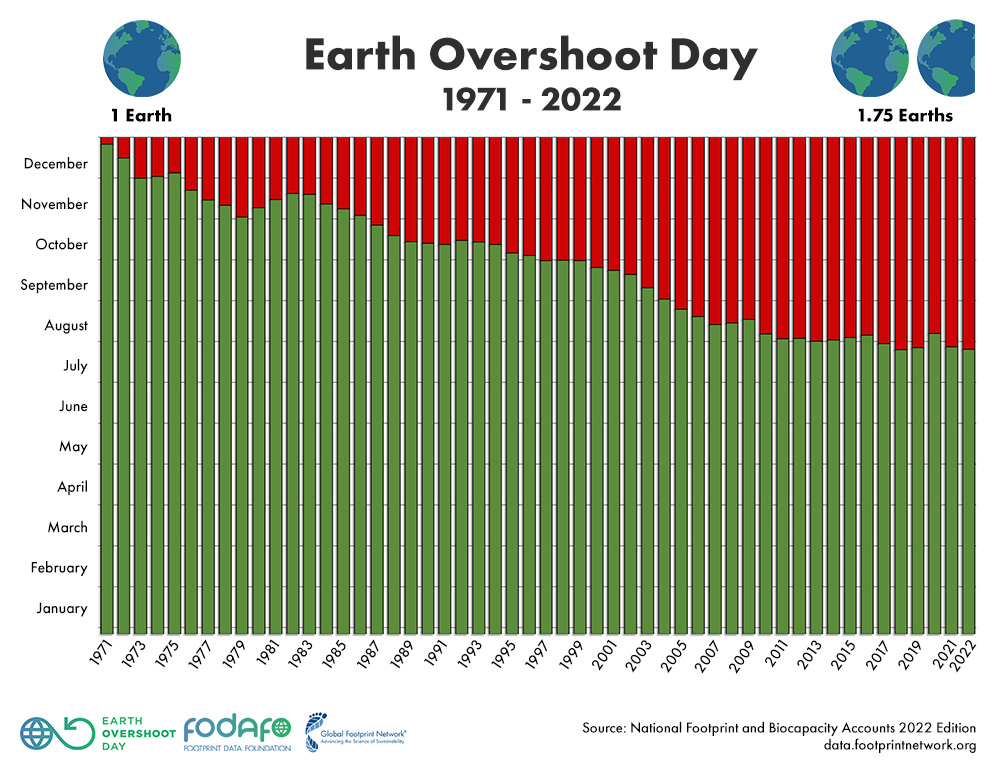
July 28th is #EarthOvershootDay for 2022.

WTF is Earth Overshoot Day?
Glad you asked.

Earth Overshoot Day marks the point in the year where we've used up the amount of resources that the planet can regenerate in a year. So after this point we're basically going into debt and 'borrowing' (stealing) resources from future generations. We're using up the resources NOW, and they literally won't be available to future generations.

In 1971, we were pretty much living within our resources, and Earth Overshoot Day was 25th December.
9 years ago when I first came across the concept, we overshot on Aug 3rd.
Today, globally, we are using up 1.75 earths worth of resources each year.

You don't need to be a climate scientist, or an 'eco-maniac' to recognise that we only have one planet, and that if we keep consuming more than we can replace, then at some point this is going to catch up with us.
IT'S NOT ALL DOOM AND GLOOM THOUGH!!

Just as we've moved the date as society has grown and become more fossil fuel dependent and consumer focussed, and behaviours have changed, we can absolutely move the date in the opposite direction!

** Reforesting 350 million hectares of forest would move the date of #EarthOvershootDay by 8 days

** If we reduce our footprint from driving by 50% around the world and assume one-third of car miles are replaced by public transportation and the rest by biking and walking, #EarthOvershootDay would move back 13 days

** If we reduced global meat consumption by 50% and replaced these calories through a vegetarian diet, we would move #EarthOvershootDay 17 days (including 10 days from reduction of methane emissions)

So TODAY, could you pledge to:

- Support gold standard re-forestation projects?
Check out organisations like JUST ONE Tree

- Cut your car usage by 10/20/50%?
Apparently 38% of journeys in the UK are under 2 miles - replacing at least some of these with walking or cycling if you're able to

- Cut your meat consumption by 50%?
Start with Meatfree Monday and go from there!


What will you do to #MoveTheDate today?
Do let me know in the comments!


TOP TEN FOOD WASTE TIPS

When we think about food and climate, most of us probably think about agriculture, especially meat and dairy. Lots of us have made the connection between what we eat and emissions, but fewer of us have made the link between what we DON'T eat and emissions.

According to Our World in Data, food waste is responsible for around 6% (probably more) of global greenhouse gas emissions.
To put this in context...

  • Food waste has around 3 times the impact of aviation (estimates vary from 2-5% of global emissions for aviation)
  • If food waste were a country, it would be the third biggest emitter of greenhouse gases behind the USA and China
  • According to Wrap, one of the leading sustainability charities in the UK, up to 70% of food waste occurs in households!

So food waste is not only a Big Deal when it comes to the climate crisis, it's something we can have a BIG impact on in our homes, without having to wait for governments and businesses.

AND taking action on food waste will save us money! Apparently the average family in the UK spends around £60 a month on food that isn't eaten.

So where do we start?
Glad you asked! Here's my 'Top Ten Food Waste Tips' (please say this in your head like you're a presenter on 1980's Top of the Pops...)


1. Do a food waste audit

Super dull. But super useful. Will help you to ID exactly what your common culprits are, and from there you can work out a plan to tackle them. For example, bagged salad is one of the most commonly binned foods - we buy it because we feel like we should all be eating more greens and salad, pop it in the fridge, within about 36 seconds it starts to look a bit ropey, and before you know it you have a new species of slime. You bin it. And repeat...


2. Do a meal plan
Super dull. But super useful.
It doesn't have to be anything fancy - just have an idea of what needs eating up before you make your meal plan and shopping list, and factor in the fact that you'll probably be knackered my Wednesday (Monday?!) so maybe some freezer/easy meals for later in the week.

3.'Eat me first'

Have an 'eat me first' box or shelf in the fridge where anything that needs eating up gets up and everyone knows to eat that first.


4. Rescue your tired fruit

Chop up any tired looking fruit and store in bags in the freezer, ready to whiz up a nutritious and delicious food waste busting, smug mum feeling at the drop of a hat.


5. Love your freezer

There's lots and lots of stuff that can be frozen (check out Knackered Mum Kate's Full Freezer site for a shed load of freezing advice!) including milk, cream, butter, eggs and cheese. You can also freeze stuff on it's Use By date too if you're not going to get round to eating it in time.


6. Ignore Best Before Dates

On the subject of Use By and Best Before Dates..
Best Before Dates can be safely ignored. There's a chance things like crisps might be a teensy bit stale if you leave them a couple of years(!), but most things will be none the worse.
Use By dates are more of a definite, although I have to confess I'm pretty lax on these for things like milk and yoghurt - if you're in any way immunocompromised, ignore me and follow the dates!


7. Make fridge soup/'fridge surprise' with any leftovers before going shopping.

Remember that the soup can then be frozen (especially if it's the middle of summer and no-one can be tempted with a nice bowl of warming soup..!)


8. Keep your bread crusts

I have a bag in the freezer for bread crusts, and even half pieces of toast or sandwich that the kids have left. I'll take bits out to whiz up for breadcrumbs when I need them, and when it gets full I make a savoury bread pudding.


9. Freeze in tiny portions!

Things like pesto, tomato puree and lemon juice can all be frozen in ice cube trays and then decanted as you need them - no more growing weird furry mould on that half jar of pesto that's sat in the fridge!


10. Go bananas...

If you've got bananas that are going brown and you can't find the energy to make that lockdown special banana bread, simply peel them, chop them and whack them in a bag in a freezer. They can then be used in smoothies, banana ice cream, or to make that banana bread when you can face it...


Do share your fave food waste tips and recipes!


NOTHING NEW IN ’22..!

Those of you who have been following for a loooooong time might remember that my 'journey' into all things Sustainable(ish) started with My Make Do and Mend Year - a year of buying nothing new with my family.
2022 marks the TEN YEAR anniversary of that life changing (I know it's a cliche, but it genuinely has changed my life!) year, which feels absolutely bonkers.
10 years ago our kids were 4 and 1, and I remember saying at the time that it would undoubtedly be a whole different experience with older kids/teenagers. So now I'm going to give it a go...!
And I'd love you to join me - are you up for #NothingNewIn22?


How does it work?

At it's most simple, you buy nothing new for a year. So only pre-loved, secondhand, vintage etc etc.
BUT the beauty of this challenge, is that you totally make your own 'rules', so that it works for you. For example:

First time around, with young kids, these were our rules:

  • Second-hand purchases only EXCEPT:
    - food
    - toiletries and medicines
    - consumables eg glue etc
    - new parts needed to fix something that breaks
    - shoes for the kids (I wanted to make sure that my crazy project didn't bugger up their little feet!)
    - underwear 

This time around, with a 13 and 10 year old, our are rules are:

  • Second-hand purchases only EXCEPT:
    - food
    - toiletries and medicines
    - consumables eg glue etc
    - new parts needed to fix something that breaks
    - school stuff for the kids if we've exhausted all other possibilities
    - underwear (although I don't think any of us need any..!)
    - the kids are allowed to choose one exception each

You can totally make up your own rules!
Some things to think about:

  • Just you? Or the whole family? Or you and your partner and not the kids? Or another combo!
  • A whole year? Or start with a month and see how you go? Or try 3 months? Or 6?
  • Everything secondhand, or just clothes, or tech, or something else?
  • What are your exceptions?


But why...?!!


Great question! And starting with Why is a really important thing to do.
For me, it boils down to this.

We're in a climate and ecological emergency.
Household consumption (direct and indirect) accounts for around 60% of global greenhouse gas emissions and consumption has sky rocketed in the last 20 years.
We are bombarded with ads day in, day out, to buy buy buy. The subliminal (or not so subliminal in many cases) message being that you're not good enough, but that you will be prettier/more popular/look younger/fit in if you have the latest x,y,z.
We all know logically that it's bullshit, but we're hard wired to fit in with those around us, and advertisers know this and manipulate us into buying stuff we don't need or maybe didn't even know we wanted until we saw it!

And buying stuff is so easy now (thanks Amazon!). One click, and it's with us the very next day. With very little thought and very little effort on our part.

But it's killing the planet. 

Everything we buy has an impact.
The raw materials have been grown/mined/created (often in appalling conditions for the workers, and in a completely non-regenerative way) shipped somewhere, the item has been made (again, often in really crappy conditions), shipped to a shop or an Amazon warehouse, and then on out to us. 
It all uses energy (carbon) and is stripping the planet of resources. Not to mention the impact on the people in the supply chain.

Before our first year buying nothing new, I didn't really give much thought at all to what I was buying, other than where I might be able to get it cheapest, or soonest.

The year changed all that. 
It forced me to slow down.
It was the stop gap I needed to prevent those knee jerk 'middle of Lidl' type purchases.
It made me a much slower, much more thoughtful consumer.
And those habits, by and large have stuck (with a little bit of slippage/wriggle room, hence repeating the exercise now!).


Want to join in..?!

First time round, I did the challenge on my own (dragging the rest of the family along!) and documented the year with a daily blog post (you can see them all here).
This time around, I thought it would be fun to do it together. I thought that maybe a few hardy souls might be interested, but have been blown away by the response!

I'm writing this on the 8th Jan 2022:
- 550 people signed up for the #NothingNewIn22 intro Zoom.
- The replay of the intro Zoom has been watched on You Tube nearly 600 times.
- There are nearly 400 people in the #NothingNewIn22 Facebook group.

And I think that this will grow and grow.

Come and join us!
You can catch the replay of the Zoom intro here.
And the
Facebook group is here.
If you're not on Facebook, don't worry! I'll be posting lots of useful info here on the blog, and you can join in/follow along with the #NothingNewIn22 hashtag on Twitter and Instagram.


Are you in?
Let me know in the comments!


THE POWER OF YOU…

It's very very easy when thinking about the climate crisis to feel powerLESS. HopeLESS. Too small to make a difference.
But we are more powerful than we know, and certainly more powerful than we give ourselves credit for.
I'm a massive believer in the power that we have as individuals to create positive change, so I absolutely LOVED hearing Sandra Sydow who runs a project called 
Climate Pitch, talking about the 4 different types of power we have as individuals. In fact, I loved it so much I asked her if she would mind me sharing it. Thankfully she said yes, and I've been using it in talks ever since, and wanted to share it with you all today. 

We don't need to wait for government and business policies to get onboard before anything changes.
WE can be driving those policy changes, and much much more.
Here's how...

Our power as consumers

Some people, understandably, dislike being labelled as consumers. I'm not saying it's our sole role/purpose by any means, but we live in a very consumerist society, and one of the things that we all do as part of our daily lives is buy and consume. Whether it's clothes, food, tech, books....

And this is where a lot of our power can lie.
I have no idea how accurate this figure is, but a quick Ecosia search comes up with a stat that we can make up to 35,000 decisions every day. In the words of Anna Lappe, ""Every time you spend money you're casting a vote for the kind of world you want."

Our choices matter. 
If we buy less fast fashion, more organic food, if we repair instead of buying new, or refuse to upgrade each time Apple tells us to, retailers will have to start to respond.

That's not to say we have to make the perfect decision every time. No one can do that. It's more about recognising the power that our buying choices can have (even the really dull, mundane ones about what loo cleaner to choose) and making better decisions more of the time.


Our power as citizens


In addition to the power of our choices, we also have the power of our voices, and this is another one that we underestimate.

- Use your citizen voice - ask for better, demand change.
- Vote.
- Be that person who writes to your MP, or your local council.
A study in 2017 asked MPs why they weren't taking more action on climate change, and most MPs said that they weren't hearing that it was an issue from their constituents. Let's change that.
- Tweet brands and retailers to let them know if you're not happy with something (and indeed if you're really happy with something!).


Our power as influencers

Influencers aren't just people who swan around looking beautiful on Instagram sharing lots of #ads and #sponsoredposts.
We are ALL influencers.
Our own behaviour affects those around us. Just by showing up and 'being the change' it gets seen by other people. And we never know the ripples that we create when we change one thing. When we have one conversation. When we share one social post. 

Sometimes I think we (I) have a tendency to back away from conversations about what we're doing and the journey that we're on, for fear of coming across as though we're judging people, or maybe even a fear of being judged.

Show don't tell. 
Step into your influencer status.
Share your own journey and story. 
You can and do inspire change in others.


Our power as change agents


I LOVE this 'label' - doesn't it sound great? And like we should all have capes and some kind of secret handshake?
The idea is that we all the potential to effect change in the organisations that we are involved with. Be that our workplaces, the kids schools, any sports groups we're involved with etc etc.

By asking questions about pensions, or recycling. Or maybe we step up and we're the ones who suggest that there should be a 'green group' and galvanises colleagues to get involved. Or maybe simply suggest trying a fairtrade brand of coffee.

There's a huge amount of potential to 'be the change'.


For example...

Let's say there's a brilliant blog that you read that shares the suggestion that moving your energy supplier to a renewable tariff might just be one of the most impactful things we can do as individuals (sounds like a brilliant blog, do share it with your friends...)

So you decide that you're going to bite the bullet and do it.
You make a consumer choice. You vote with your wallet, and you take your money away from the fossil fuel guzzling planet burning company, and give it to the lovely renewable company where baby animal gambol through the wildflower meadow hand in hand.

THEN you can write to the company you left telling them why.
AND you could also write to your MP asking why subsidies still exist for fossil fuels.

THEN you share your joy, excitement and smug-ness as your new planet saving super hero status with friends and family and on your social media feeds. With or without the discount code you've been given to share.

And as if that's not enough, you skip into work the next day and ask where your work gets their energy from, and if they would consider switching to a renewable tariff.

Before sitting down with a nice cup of tea and a biscuit whilst you polish your secret change agent badge.


What do you reckon - do you love this as much as me?
Let me know in the comments!


SUSTAINABLE(ISH) EASTER EGGS

Easter is coming!
And that can only mean one thing. Chocolate! (Before you e-mail angrily, I know that Easter is about more than chocolate. Who could forget hot cross buns..? 😉 )

As with all things though, chocolate has it's dark side (and I'm not just talking cocoa content - see what I did there). I've not been brave enough to watch it yet, but there's a chocolate episode in the
Netflix series Rotten  called 'Bitter Chocolate' - the episode info says "the long journey from bean to bar is packed with misery" - which isn't really something we think about when it comes to chocolate.

And then with Easter eggs there's also the mountain of packaging to take into account I'm fully aware that there are lots of people far more organised than me who may have already bought and stashed their Easter eggs so this info may well be too late. But I hope that there are also others who are like me and a little less organised and also concerned that any Easter eggs that are in the house for too long will be scoffed at times of stress before being gifted...

Here's a few sustainable(ish) options:

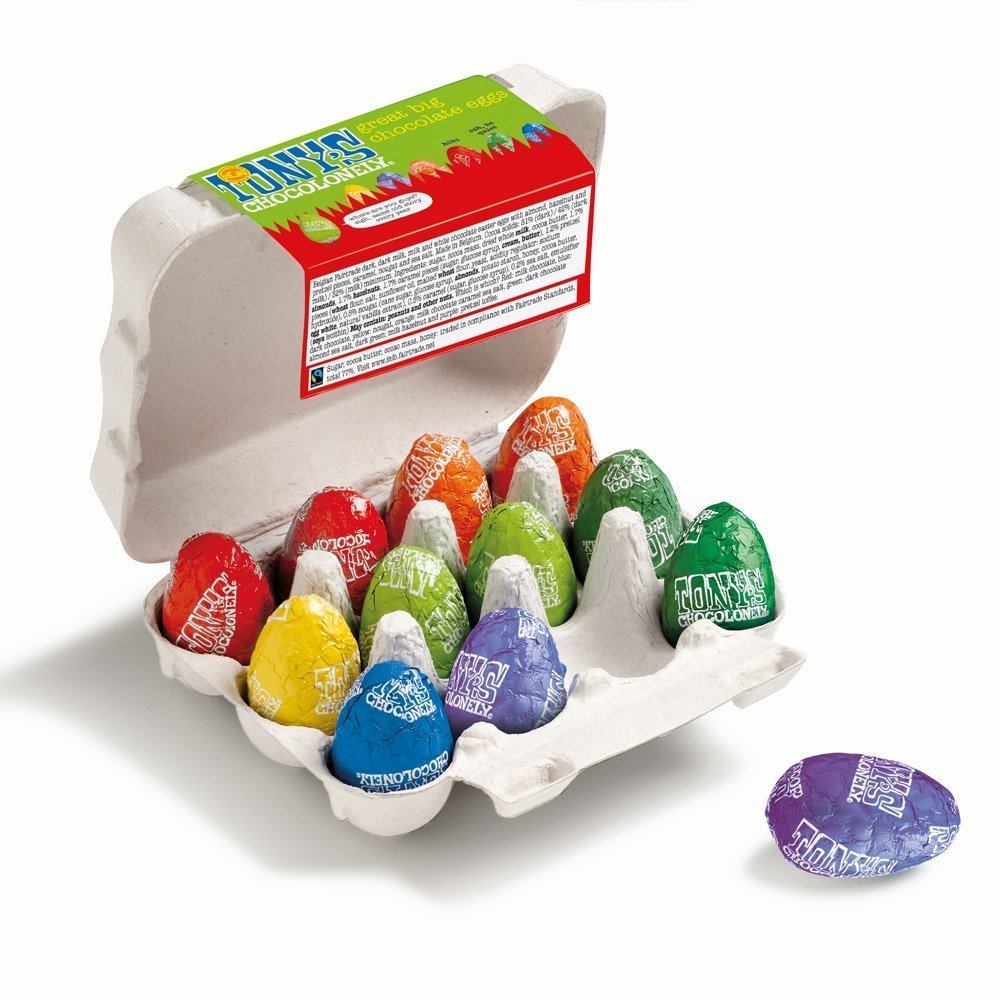
Tony's Chocolonely

Tony's are one of the good guys when it comes to chocolate. There was a bit of a hoo-hah in the press recently, but essentially they're doing good stuff, and working really hard to expose and eradicate slavery in chocolate supply chains.
And it tastes AMAZING!!

They have a special lemon meringue Easter bar, as well as some super cute (but they are quite tiny!) foil wrapped eggs in different flavours. 

You can find them online, at Sainsburys and Waitrose stores, and at lots of zero waste shops.


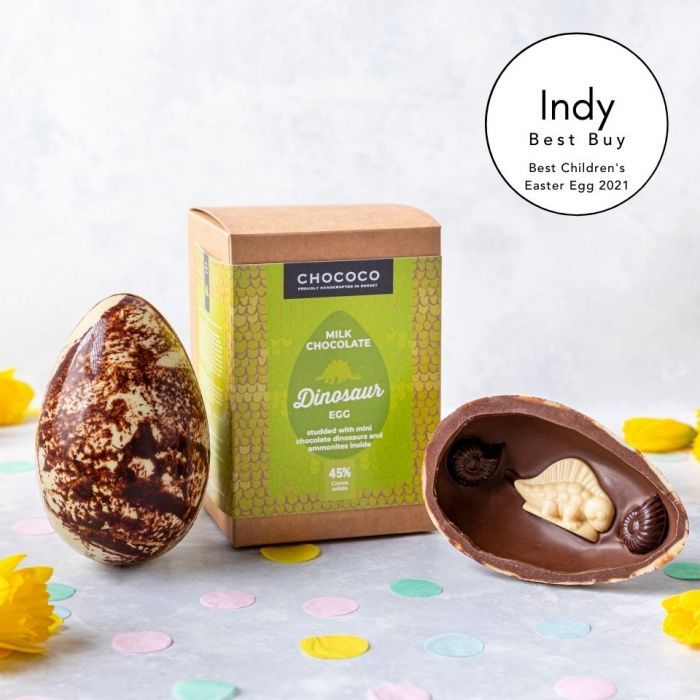
Chococo

An independent brand, based in Wareham on the South Coast, working closely with cocoa growers and producers, to produce quality chocolate in recyclable and compostable packaging.

I've ordered the kids one of these dino eggs each from their Easter range, and will obviously be sampling the chocolate for quality control purposes...


Cocoa Loco

"Handmade, Organic & Fairtrade Chocolate made with love in Sussex".
These guys tick a lot of boxes! 
They've got a brilliant
Easter range and their packaging is plastic free and compostable.


Divine

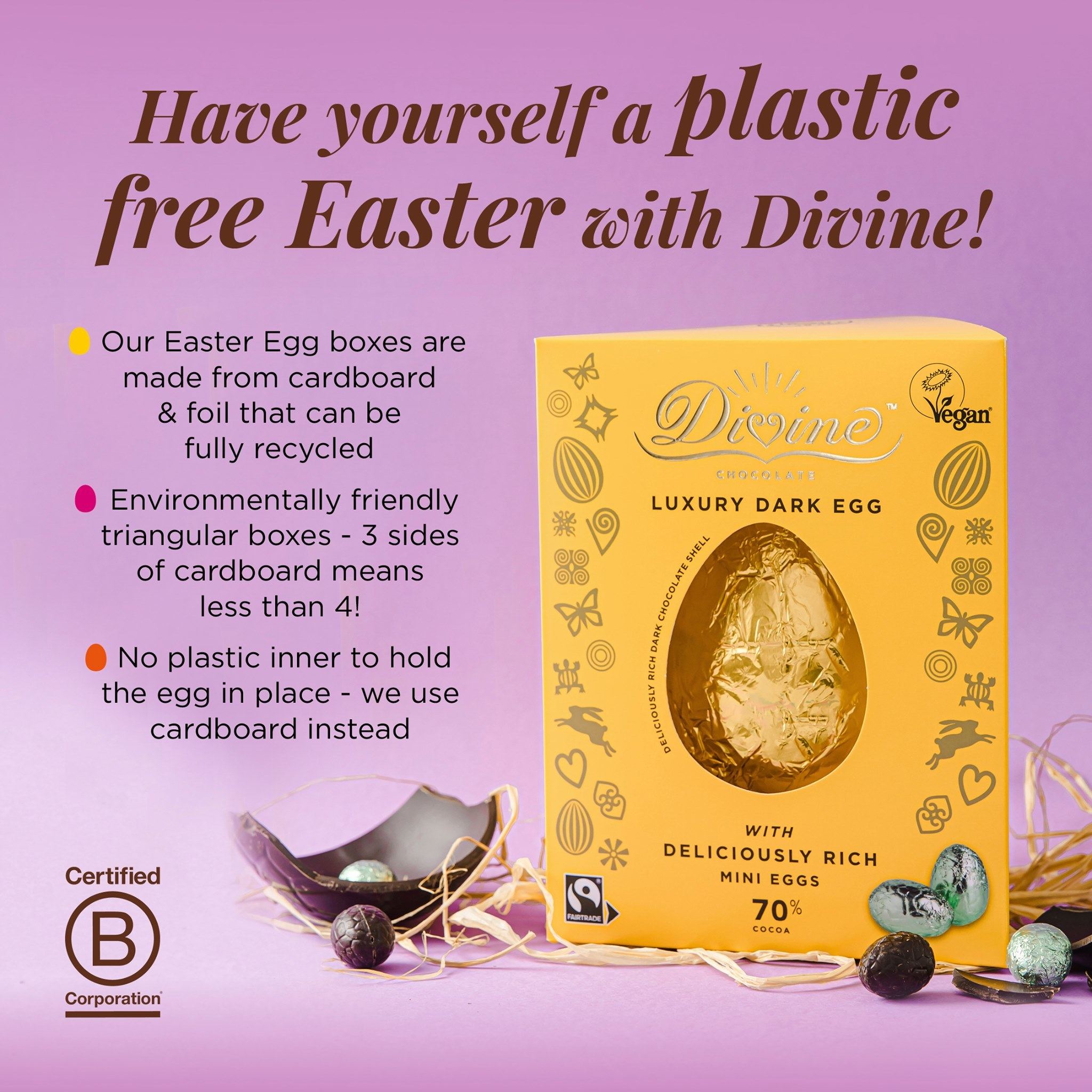
Divine are a well known brand, and their chocolate and eggs are pretty widely available in many UK supermarkets.
Their
range of Easter eggs are plastic free and palm oil free.


Co-op

Co-op have introduced a range of plastic-free and Fairtrade eggs that look pretty delicious!


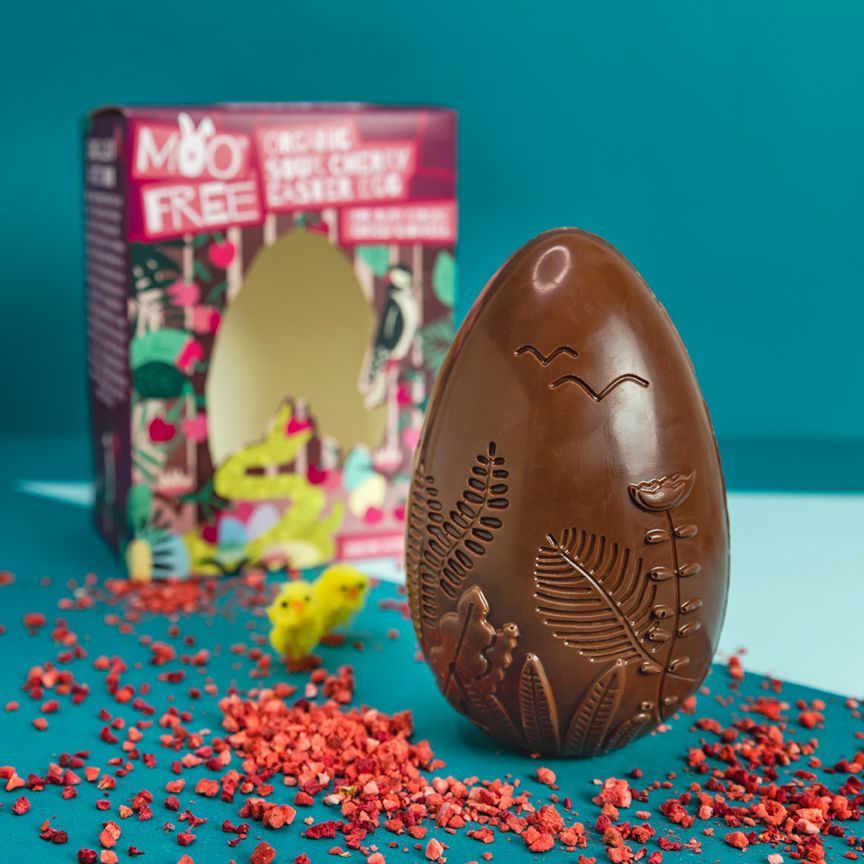
Moo Free

Moo Free are dairy-free, gluten-free, soya-free and vegan. And their packaging for their Easter eggs is plastic-free too!


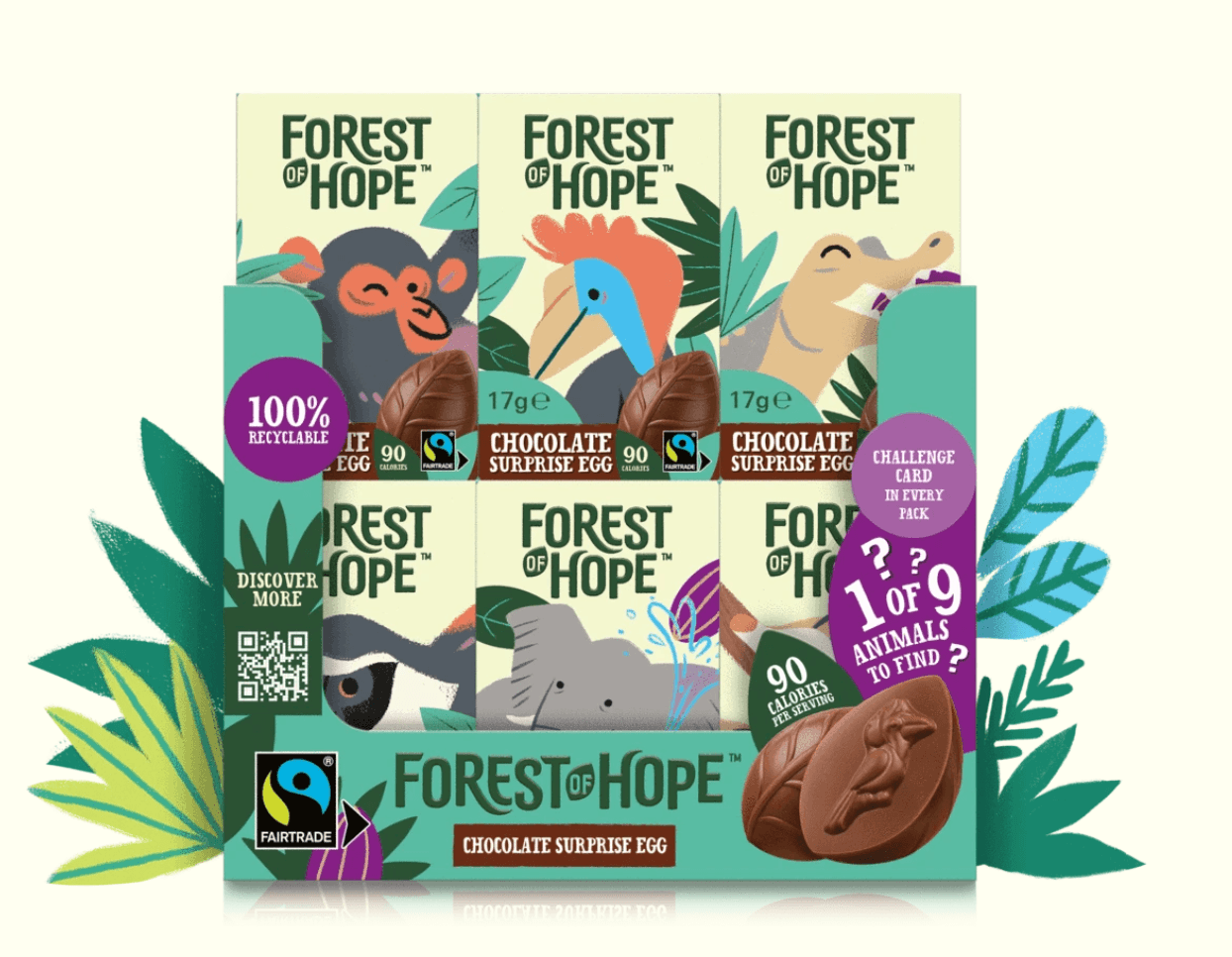
Forest of Hope

Check out these ethical alternatives to Kinder Eggs!
Available online and also now at Co-op stores, these miniature eggs come with a fairtrade and palm-oil free chocolate animal shape inside, some fab animal facts and an activity to do!
(If you click on the website, it does a weird thing where it asks you to enter your date of brith for some reason - don't panic, it's not a spam site!)


Hopefully that's more than enough to keep you busy
scoffing chocolate with a clearer conscience at Easter!


THE ABSOLUTE BEGINNERS GUIDE TO COMPOSTING

Composting...
Who ever thought aged 18 that they would find themselves (excitedly..?) reading a blog post on composting hey? Yet here we are - oh how are lives change...!

That's not to say that composting isn't exciting. As I'm discovering, it very much is. But I thought for a long time that it was a pretty niche interest, something that only full on gardening geeks could or would get excited about. But I have been proved wrong, and it appears that the thirst for composting knowledge is strong.

This is written by a beginner, for a beginner. 
I wanted to put together something that a complete newbie could come along to and hopefully find the answers they need, in a jargon free and easy to access way. Composting can feel like a bit of a dark art, and really complicated. But as you'll hopefully discover, it's really pretty simple, and as with most things, we just need to let nature work her magic.

As I'm very much a crap gardener and a very novice composter, this post is essentially a written down/bullet pointed version of Episode 99 of the podcast with the very brilliant Catherine Howell from Barefoot Kitchen - she's the composting Queen!


Why should I compost?

Great question to kick off with!
Composting is basically a way of recycling garden and kitchen waste (more on what you can put in there below) into ermmm, compost! So taking all the nutrients in the 'waste' and turning it into something useful that can be used in your garden to help stuff grow.

How does it work?

It depends a little bit on which system you choose, but basically it's magic.
Kidding. Well, actually not. It is magic, but it's 'nature's magic'. We're essentially helping nature to do her thing a bit more quickly. 
So the waste gets piled up, heats up, and the bugs and bacteria and enzymes that exist naturally get to work and start breaking it all down. Essentially what they're doing is eating it, and then pooing out nutrient rich soil. See, magic!

I've heard people talk about hot composting and cold composting - what's the difference? And what about bokashi? And wormeries?


Cold composting
Is basically your regular compost heap - it can literally be a pile in the garden, or a plastic 'dalek' type bin, or made from pallets, or anything in between.
It's mostly used for garden waste, and you can also put things like veg peelings and teabags etc in there.

Hot composting
Is a specially insulated compost bin that heats the compost to a huger temperature, meaning that you can put cooked food waste and meat etc in there as well as garden waste.

Bokashi bins
Are a different kind of magic - they kind of pickle the food waste meaning that you can then put kitchen waste in a regular compost bin.

Wormeries
Are special bins or containers with worms in! They tend to be used more for food waste, rather than garden waste. 


Cold composters

These are your regular bog standard compost bins.

  • What do I need?
    The simplest version can just be a heap (a literal heap) of garden waste in your garden - ideally about a metre cubed in size.
    If you fancy a more contained version, then there are about a gazillion different types and designs out there - from the bog standard black plastic 'dalek' bins that many councils give out, to fancy pants wooden ones in the shape of beehives, to ones on legs that you can roll like a massive compost tombola - take your pick and pay your price!
    The idea size is about a metre cubed, and ideally a lid is a great addition.
  • Where do I put it?
    The ideal place in a sheltered yet warm spot, on well draining ground.
    However, as Catherine points out in the podcast - the best place is actually the place that's easy to get to and where it's actually going to be used. If you've got to trek to the bottom of the garden every time the food waste caddy is full, you're much less likely to bother.
  • Can it go on concrete?
    Ideally it should be on bare ground (soil) as this helps any liquid to drain away, and bugs and worms to get in and work their magic.
    Having said that, Catherine says that one of the best compost bins she's ever seen was on the balcony of a first floor flat. And it still had worms in it (go figure?!)
  • What can I put in it?
    Garden waste
    Uncooked food waste (vegetable and fruit peelings
    Tea bags (ideally plastic-free) and coffee grounds
    Shredded paper and cardboard
    Bamboo toothbrushes (minus the bristles), cotton buds with paper/wood stems etc etc.
    Straw and poo from herbivore pets eg rabbits, chickens etc.
  • What can't I put in it?
    Avoid cooked food and meat or fish.
    Poo from carnivores (cats and dogs).
    The temperatures in a regular compost heap don't get hot enough to kill any pathogens, and you could also get a problem with rats.
  • Can I put compostable packaging and bags in there?
    Great question and it's a really murky/tricky one to answer.
    'Compostable' and 'biodegradable' aren't legal terms, and often don't mean what we might they do. Biodegradable just means it will break up into smaller pieces - so potentially  just seeding your compost with microplastics. 'Compostable' usually refers to industrial composting conditions which are carefully managed to provide the correct heat and conditions for the 'thing' (bag/packaging/cup etc) to break down. It's important to look for things labelled 'home compostable' to be really sure - and then it will still break down better if you chop it up into smaller bits.
  • What's all this about ratios and brown and green waste?
    This is where it starts to feel a bit complicated and thankfully Catherine does a brilliant job of de-complicating it in the podcast. 
    Brown waste is the dry stuff - so dry leaves, twigs, small sticks, straw, shredded paper, cardboard etc.
    Green waste is the wet stuff - so fruit and veg peelings, soggy leaves etc, grass clippings etc.
    Ideally we're aiming for a 50:50 mix of brown(dry) to green(wet) to give our compost the best chance of doing it's thing.
  • Is there any maintenance?
    Giving it a regular 'turn' will help to keep the conditions aerobic (ie with oxygen). 
    Without enough oxygen, the conditions in your compost could end up being anaerobic (without oxygen) meaning your compost will ferment, and essentially becomes a little mini landfill site in your garden, emitting methane and other greenhouse gases - not really what we want. 
    Getting in there with a garden fork to turn it around and create some air spaces is the easiest way. Although when I say easy, it still sounds like a bit of a pain in the butt to do. Catherine advocates taking the outside off, moving it along a metre and then shovelling it all back in again once a year. Again, sounds like a massive pain to do, but at least it's only once a year!
    You can get 'tombola' style containers that you can rotate and roll, which sound great from an aeration perspective. However I'm not sure how the bugs and worms get inside?
  • What's all this about weeing on your compost heap? Is someone winding me up?
    No apparently not! It's a thing. Sometimes when compost heaps slow down or stop working, they need a nitrogen boost. And the most convenient, cheapest and eco-friendly source of that is, you guessed it, pee! 
  • What comes out the bottom?
    Compost! It should be dry and not smelly if you've got the mix right and kept it well aerated.
  •  What can I do with the compost?
    I naively thought that if I could make enough, then I would be able to use my homemade compost in pots and for growing veggies etc in the place of shop bought compost. Sadly this isn't the case. Apparently our homemade compost will be too strong for seedlings.
    There are two main options:
    - Spread a thin layer on top of your flower and veg beds to provide a lovely nutritious boost.
    - Look online for a compost recipe that tells you what else you need to add to your homegrown compost to create potting compost.
  • My compost is smelly and slimy
    It's probably got a bit anaerobic and a bit wet -  give it a good fork around and add some dry/brown material like shredded paper or dry leaves or cardboard
  • My compost is really dry
    Add some wet/green material, or even a bucket of water. Or wee on it.
  • What about flies?
    Flies are kind of a given around compost heaps in the summer. One thing you can try is having a bit of cardboard that you place back on top after adding new material.
  • What about rats?
    I think this is something everyone worries about. According to Catherine, rats don't like noise or movement, so she gets her kids to regularly hit her compost bins as they're going past! 

Hot composters

We've got one of these, called a 'Green Johanna'. Our council subsidises them for local residents as they don't provide a food waste collection (grrrrr!).
All the same rules apply as for cold composting above.
EXCEPT....
You can put cooked food, and meat, dairy and fish in them.
We use it for all of our food waste, as well as the chicken poo/straw, grass clippings etc. After chatting to Catherine I've now realised why it's so slimy - we need more brown/dry waste in there, so I'm eyeing up any old newspapers, shredded paper etc to add in.

Our Green Johanna


Bokashi Bins

We tried these years ago (pre-kids) when we had a teeny garden and weren't really producing any garden waste. I obviously didn't do my research properly, as I naively assumed that the bokashi magic bran would break down all of our food waste into compost, in the bokashi bins. So I was very taken aback to open our bins after 3 weeks and find everything looking pretty much intact.

  • How do they work?
    This is a different kind of magic, that involves a special bran that pickles or ferments the food waste.
  • What can I put in there?
    All of your food waste, including meat, dairy, fish and cooked food.
  • What comes out at the end?
    Pickled/fermented food! And a liquid that you can use as a plant feed.
    The fermented food waste shouldn't smell, and can be added to a regular compost heap, or buried in your garden. If you don't have a compost heap, you might be able to find someone who does who would be  more than happy to take your pickled food waste (see below).

Pic Bokashiliving.com


Wormeries

I love a wormery - they're great projects for kids, and they work really well if you want a way to deal with your food waste and haven't got space for a garden or compost heap.

  • What can I put in?
    Food waste - chop it up into 1-2cm cubes (apparently worms only have small mouths!)
    Cooked food eg small bits of bread etc
    Dog and cat poo
  • What can't I put in?
    Citrus fruits
    Oily and spicy foods
    Meat - they can eat meat but it will encourage flies
  • What comes out?
    Worm wee and poo! The worms produce a liquid which you need to drain off, and can dilute to use as plant food. The worm 'poo' is dark, rich, crumbly goodness, which you use in the same way as you would compost above.
  • There's loads more wormery info in this blog post here, and this podcast episode with Anna from The Urban Worm.


Phew! What a beast of a post!
I hope it's helpful - do you feel more able to make a start composting now?
What have I missed out?
What questions have you still got?


SHOW THE LOVE WITHOUT COSTING THE EARTH (AKA 5 PRESENTS THAT AREN’T BAD FOR THE PLANET..)

It’s Valentine's Day in just a couple of days time, and I’m well aware that if you do celebrate it, then this post may well be too late if you’re an organised type.
Bear it in mind for next year if that’s the case, and don’t stop reading if you don’t celebrate Valentines Day (we gave up on it years ago!) because I’m going to be sharing some fascinating stats and some alternative gifts that are a great way to say ‘I love you” or “thank you” or “you’re really rather brilliant” at any time of the year.

Giving ‘stuff’ has become our way of saying I love you hasn’t it? And who doesn’t love a present?
But the problem with Valentines gifts, and indeed most gifts at any time of the year is that that although they might say “I love you” to the recipient, they aren’t usually saying “I love you" to either the people who made the gift, or to the planet.

We are at peak stuff.
We are using up resources at an astonishing rate; the people who make much of  our stuff are being exploited; and most of us are struggling to find anywhere to put anymore stuff in our homes. Oh, and our landfills are full to bursting.

God I’m SUCH  a party pooper aren’t I?

 Never fear – this isn’t a whole post about how terrible everything is, there is some good news –there ARE some fabulous ways we can do Valentines (and indeed other gifts) that don’t cost the earth (see what I did there...).


Flowers

Flowers feel like they should be a pretty safe bet don’t they?
After all, you can’t get much more natural than an actual flower right?
 
Well....just because it’s natural doesn’t unfortunately mean it’s harmless. I did a
podcast last year with  Sara Willman from My Flower Patch and was gobsmacked to learn that a bunch of imported flowers from Holland or Kenya can have the equivalent carbon footprint of a flight from London to Birmingham!!
AND that workers and growers in the flower industry can be working with lots of chemicals and very little protection and can work in pretty awful conditions.

Buying British flowers can reduce the carbon footprint of your flowers by around 90%!!
Now I know it’s February and not ideal weather for growing flowers here in the UK, but there are still options for fresh British blooms for Valentines Day – AND some florists do dried bouquets of UK grown flowers which are beautiful and last forever. I know this because my brilliant sister-in-law sent me a bunch for my birthday at the end of October last year from her local florist!
 
Check out the great website
Flowers from the Farm which has lots more info about the benefits of buying local British blooms and has a directory you can search to find a florist local to you or your intended recipient.


Chocolate

OMG – I genuinely AM the fun police now aren’t I?
Can’t we even indulge in chocolate during lockdown without feeling guilty?
I’d love to say that you can and crack open a bar of (insert name of popular chocolate brand here) with you, but it turns out that’s not the case.

In the same way that rainforest is being cleared to create farmland for soy and animals, forests are also being cleared for cocoa growing. More than 80% of the Ivory Coast’s forested areas have vanished between 1960 and 2010, and in Indonesia 1.7 million acres of forest were cleared for cocoa plantations between 1988 and 2007.


And that’s not all. Sadly.  Chocolate brand Tony’s Chocoloney have been running a #sweetsolution campaign to highlight the fact that there are an estimated 30,0000 people in modern slavery and over 1.5 million children working illegally in the chocolate trade. And that’s just in Ghana and the Ivory Coast which make up 60% of the world’s cocoa.
That’s shocking isn’t it? You can find out more about the campaign, the problem and what we can do about it on the
Tony’s Chocoloney website here.


Thankfully this doesn’t mean we have to give up chocolate entirely.
Ethical Consumer has a league table of the best and worst of the chocolate makers – Tony’s as mentioned, do pretty well, along with Seed and Bean, and Divine. Performing very poorly with scores of 1.5 out of 20 are Mars and Cadburys and Nestle gets a big fat zero.

Anything homemade

George Monbiot is a journalist for the Guardian and wrote a powerful piece called The Gift of Death back in 2012 – at the end is this paragraph: 
"Bake them a cake, write them a poem, give them a kiss, tell them a joke, but for god’s sake stop trashing the planet to tell someone you care. All it shows is that you don’t."

Ouch.
You don’t have to be a brilliant baker, or a perfect poet, but something that you’ve put thought and time into will always be appreciated (especially if it’s edible…)


Climate Positive Gin

Now we’re talking right…!
Pretty much everything we eat and drink (and indeed buy) has a carbon footprint and is contributing to the greenhouse gases that are warming the planet. We can’t even drown our sorrows with a cheeky G&T or two without feeling like we’re a part of the problem.

 
Fortunately, if you or your loved ones are partial to a gin or two, you can now indulge with a clearer conscience (I take no blame for any ensuing headaches) –
Arbikie Nadar gin is the first climate positive gin, made from peas, that saves 1.54kg of CO2 per bottle!


#ShowTheLove

If you’re not a fan of Valentines Day then you don’t need to be left out. You can use the occasion to show your love for the planet by joining in with the Climate Coalitions #ShowTheLove campaign. The idea is that you craft green hearts – however you can , crochet, knitting, felt, origami or just good old scissors and green paper - and then either use them to create a window display or similar to start conversations with your family and neighbours; or send a green heart to someone in a position of power, such as your MP to let them know that you’re concerned about the climate crisis and want to know what they’re doing to help.

We has a craft-a long session on Zoom one evening earlier on this month in
The Knackered Mums Eco Club and it was brilliant to see everyone’s creations, as well as share ideas for where to send our hearts and support each to be brave and actually get them in the post!
This is potentially a great one to do with the kids as half-term approached (sorry Scotland, I know you’ve just had yours) – a screen-free, indoor activity and a gentle conversation starter for them to share what they love about the planet, and any worries they might have,
There’s loads more info on the
Climate Coalition website here.


How about you?
Do you Valentine? 
What are your fave low/no impact gifts to give, at any time of the year?
Let me know in the comments!


CONFESSIONS OF A KNACKERED MUMS ECO(ISH) CHRISTMAS

I've spent the last couple of months helping running a couple of rounds of the Crap-free Christmas Bootcamp, and helping the Knackered Mums in the Clubhouse make some festive sustainable(ish) changes. So you would think then that I would have this whole 'Eco Christmas' thing nailed then right?
Ermmmm. Kind of. Maybe. Not really....

You see, and I've been saying this ad infinitum in the run up to Christmas, it's a journey. And we won't change our Christmas' overnight. Indeed, we might never arrive at that 'perfect eco Christmas' because (whispers) I don't think it exists. Or if it does, I'm not sure how possible/realistic it is, especially when there are kids and/or wider family involved.
I spend November vowing to not really get the kids much as there's nothing they really need, and then December panicking that they won't have anything to open. On Christmas morning I feel anxious about all the presents under the tree, and where they're going to live, and the fact that the kids already have so much stuff, at the same time as worrying the kids will feel disappointed. It's not easy.

Let's face it, the greenest Christmas would be one that's not celebrated. 
All of the extra food, the presents, the decorations, are inherently unsustainable. 
But so is living. And it would be a pretty joyless life if we denied ourselves all the things that bring us, and those around us, joy. So what we're left with is that another C-word that can cause so much angst - compromise.

So in that vein, settle yourself in for a tale of one Knackered Mums Eco(ish) Christmas - in all it's imperfection.


Advent Calendars

Oh god, I feel so guilty about this one....
Every year I talk about the 'Advent Activity' lorry that we do with our kids, which is one of the first things I did to try and shift the focus from 'stuff' to 'experiences' when I started to think about trying to do Christmas a bit differently. We have an Advent lorry that my Nana gave our eldest for his first Christmas - it has 24 drawers in it, each a little bit smaller than a matchbox (ie too small to really fit much into). So I had the idea of popping a slip of paper in there each day with an Advent Activity in it - things like 'decorate the tree', and 'star in your school nativity play'. Many of them things we would have been doing already to get ready (eg making mince pies etc) but with the odd treat thrown in like a trip to our local town pantomime (not this year sadly).

And it worked really well when they were little, and there was lots more time to fill and they were more easily entertained by the prospect of baking with mummy. Now they're both older, it's much harder, and with school and homework, most of the activities don't really get done, but they are still loath to knock it on the head.

So far, so good right..?
Ermmm, here comes the confession. My mum died the year after our year buying nothing new, and would always buy the kids an Advent Calendar. And the year before she died she bought them a Lego Advent Calendar. When Christmas came around after she had died, my auntie (my mum's sister) rang up and asked if she could buy the boys an Advent Calendar each year as my mum now couldn't, and honestly, it's still the loveliest thing, and still brings tears to my eyes. So there we go - my boys get a plastic encrusted Lego Advent Calendar each year. And do know what? They LOVE it. They absolutely love it. And I know it's not eco. But it's an imperfection I'm more than happy to embrace for the joy it brings (and the memories it holds for me). 

Decorations

I'm pretty happy with our decoration situation:

- We have a pompom Christmas tree that we made about 4 years ago which gets stored away in the loft each year and then trundled out. We also have two trees made from old pallets - one for the conservatory and one for outside. All are fitted with LED lights, and we turn them off when we're out and at night. The outdoor one is fitted with a timer so it's only on for a few hours.  

- All our other decs are a mish-mash of things from previous years, including the Christmas lego from the aforementioned Advent Calendars...!


Gift wrapping

I'm that irritating person who snatches up the wrapping paper off the floor as soon as it's discarded and then sits there picking off the tape. Any reasonable sized bits then get squirrelled away for next year (my mother in law has even been known to take them away and iron them...).
I bought two new rolls of paper from a local independent stationers that are recycled kraft paper, but they did have a plastic sleeve. The rest was paper left over from previous years and reused bits and bobs.
Confession: there were still a few bits of metallic-y paper bought many moons ago.

Last year we bought some Christmas paper tape from Babipur and still had plenty left this year. I'm not sure ours still believe in Father Christmas, but if you're more careful than we are about making sure your FC pressies have different wrapping and tape, you might need to get a bit more inventive.

I used an old ball of green wool that has been kicking around for ages to bundle things together in place of ribbon.

I'm a firm convert to fabric wrapping this year having wrapped a few gifts this way - OMG, SO much quicker and easier! I'll be scouring the charity shops for head scarves and other suitable bits this year! 


Presents for our kids

Their lists were pretty book and Lego heavy respectively, so fairly easy.
Lego - secondhand from eBay.
We had one set that was listed as 'a few pieces missing' which is stretching the truth a little, and we're now trying to source the missing bits in time for his birthday in April! The rest were all fab.
Books - we're lucky enough to have an independent bookshop not too far from us and managed to get quite a few of the books from there. The rest were from
The Bookshop, as well as a couple secondhand from eBay.
Laptop - our eldest has just started secondary school and asked for a laptop, and given the strong possibility of home schooling again in January we felt this was a good investment. We got a refurbished one from these guys, who donate all their profits to charity, so felt like a bit on a win-win.
Stockings - these were the biggest headache, and there were a few 'less than sustainable' bits and pieces in there.

Confessions:
- my husband randomly bought them a packet of Jaffa cakes each to go in their stockings
- as well as a regular toothbrush each (if I had known, I would have got these ones with replaceable heads)
- there were also candy canes (leftover from last year) that are plastic wrapped and probably contain palm oil, as well as some other sweets that undoubtedly wouldn't score highly on the eco scale

Most of the family transferred money to us and asked us to get them something, which makes life easier (apart from the wrapping up...!) as we then have no issues with buying stuff secondhand!


Other presents

We've managed over the years to pare down our gift list quite significantly. Both of my parents are no longer with us, and we decided a few years ago between the various aunts and uncles to only buy for the kids.

We bought my brother's kids an annual Whirli subscription back in May, as birthday and Christmas presents for both of them. But I also sent them a Bake at Home kit from my friend's brilliant business (thinking they might be driving my sister in law mad in the run up to the big day and this might distract them for about 3 and half minutes) and a kilo of Christmas sweets from another local business. Because isn't that what you send to other people's kids when you won't be there to witness the fall-out..?!!

My husband and I tend not to really buy each other anything but he got me a few stocking bits (sweets and chocolate), and I saw a 'Storm Pooper' print on the Uranus loo roll site and couldn't resist getting it for him and the kids. It's printed on FSC paper with water based inks.
And because I didn't manage to get organised with my husband's usual photo Advent Calendar, I put together a photo book of our 2020 - I had a quick Ecosia search and found Pixum, who use FSC certified products and are carbon neutral - if anyone knows of any other eco-friendly picture book providers do let me know! 


Food

Confession: We're not vegan. Or even veggie.
We opted for a chicken rather than a turkey, just because none of us are actually that keen on turkey.
Confession: my husband somehow managed a 5kg chicken (free range but not organic) from our local butchers. For five of us. Our kids were smaller than this when they were born.
There were a LOT of leftovers... BUT they've all been frozen. AND I made slow cooker chicken stock from the bones, so feeling pretty smug there.
We also had pigs in blankets (from the local butcher but not sure of their provenance) and sausage meat stuffing (ditto).

We get a regular organic veg box from Riverford, which makes Christmas dinner veggies SO easy. All the usual Christmas stuff is there - sprouts, parsnips, red cabbage etc, all organic and plastic-free, delivered to our door without me even having to think about it.

Leftovers: We had Christmas pizza topped with leftovers (including brussel sprouts..) on Boxing Day, and Bubble and Squeak the day after, and everything else has been frozen.

I love to bake so made Christmas cakes, mince pies, Christmas pud etc.
Confession: I didn't get the dried fruit from the refill shop, so a reasonable number of plastic bags into the bin.

Confession: There is a teeny bit (a lot) of plastic wrapped chocolates that are probably choc-full of palm oil and made by companies that are officially gits in the house. They taste bloody lovely but I do feel quite guilty.
If someone could please make it their 2021 mission to create their own ethical chocolate company that does a tin or tub or delicious chocolates in time for next Christmas I would be very grateful. 


Cards


We failed to send any this year - I'd love to say it's been a conscious decision made for eco reasons, but in reality it's more apathy/laziness...


Crackers

I think this is one my favourite traditions that we've started - we bought a set of reusable crackers several years ago and they get dragged out of the loft each year. 
Everyone picks a name out of a hat to see whose cracker they have to prepare, and then they have to make a hat, find an appropriate joke, and have a £2 budget for a small (ideally plastic-free) present. We also stick a scratch card (not eco at all, but you've got to be in it to win it..) and a chocolate brussel sprout.

This year I decided to have a go at making a reusable fabric hat for my mother in law with some Christmas fabric that I've had for years. I was pretty pleased with it!)

Confession: the £2 limit on gifts does make it hard to find anything decent/not plastic tat. We may need to reassess this (although our youngest bought me a mini bar of Tony's Chocolonely from our local Refill Shop so did very well!)


I don't know if I feel better or worse seeing it all written down like that..!
The whole point of this post isn't really to tell you about what we have and haven't done, our successes and our failures, it's to try and reassure you that imperfection is ok - especially at Christmas. 
It comes down to having a more thoughtful, more deliberate Christmas. Accepting some compromises, chipping away, and slowly working towards the Christmas you consciously want to create.  


How about you?
What went well this year?
And what are you bookmarking to work on next year?
Let me know in the comments!
INTRODUCING THE CRAP-FREE CHRISTMAS COURSE!

Join me and a merry band of similarly challenged Crap-free Christmas wannabees as we dive into into the nitty gritty, the practicalities and the emotional minefields of a festive season with less crap and more joy!


ECO-FRIENDLY AND PLASTIC-FREE CRACKERS

  • 40 million Christmas crackers end up in the bin each year
  • 99% of people in a survey said that they just threw their Christmas cracker gifts in the bin at the end of the day
  • And that's before we even think about the hats and the jokes

Clearly we could simply just not bother with crackers at Christmas, but would we want to? For many of us it's just not Christmas without a cracker, but clearly they're generating a pretty massive waste mountain, as well as using up resources and emitting 'a lot' (technical estimate) of carbon in their production and getting here to us.

Fortunately it's becoming easier and easier to go plastic-free and lower impact with your crackers, with choices for every budget. 


Make your own
If you're the crafty type OR you're desperately trying to think of ways to keep the kids occupied as excitement levels reach fever pitch, this might be your cracker of choice. You can go full on Blue Peter with loo roll inners and wrapping paper, or you can download and print off templates.
If you don't fancy that, then you can get 'make your own cracker kits' that come with everything you need and you can simply assemble whilst watching a Christmas movie with a glass of something mulled at your side. These ones here even come complete with eco-friendly gifts.

ECO FRIENDLY CRACKER SNAPS

You can even get eco-friendly cracker snaps to go with your homemade crackers. These ones here are recyclable, compostable and made in the UK.
It does say that they are 'silent snaps' and therefore pet friendly and I haven't tried them, so you might need to channel your inner Barbara Good (this reference will make no sense to anyone under a certain age) and shout "BANG!" as you pull your cracker..


Go reusable

We bought a set of reusable crackers from Keep This Cracker several years ago and they're still going strong. All you need each year is the snaps.
We have a Christmas tradition whereby everyone picks a name out of a hat, and then has to fill the cracker for that person - a homemade hat (newspaper/comics/wrapping paper); a personalised joke; and a plastic-free gift with a budget of £2. The kids really enjoy having actual money to spend and having to think of something the recipient will actually like, as well as searching for 'hilarious' jokes...


Buy fill your own

Oxfam have bought out 'fill your own' crackers this year - they are recyclable, and come complete with snaps, hats and jokes. All you need to provide is the gift which means people are much more likely to get something that won't end up in the bin within 12 hours of opening.
John Lewis and M&S also do their own versions, or why not look on somewhere like Etsy and support an independent business in what has been a really tough year for many small businesses. Just remember to look for cracker outers that are paper/cardboard without any glitter or metallic/shiny bits on them (this will render them unrecyclable).


Filling your crackers...


Hats
- Again, you can full on Blue Peter and make your own from newspaper, wrapping paper or old comics etc. It can be helpful to have an idea of everyone's head circumference, especially if you've got young kids and adults to equip, but it's not the end of the world. And isn't it kind of a Christmas tradition that the kids end up with hats that slip down over their eyes?
- OR if you're a dab hand with the sewing machine you can make your own fabric reusable 'crowns'. There are loads of templates for patterns on Pinterest. 
- OR you can buy a set of reusable fabric crowns. Depending on your budget, there's some here, or some here.


Jokes
Go crazy on Google Ecosia and find a joke that suits the recipient.

Gifts
What you choose will depend on your budget but there are lots of options to suit all purses:
- a homemade biscuit eg a gingerbread man etc if you want to keep it festive
- chocolate coins
- a scratch card (probably not entirely plastic-free, but we're invoking the 'ish' here)
- a packet of seeds to grow in the winter
- a small bar of soap/shampoo bar
- an alcoholic miniature
- an ethically made face mask - there's a great selection here
- bicycle inner tube keyring
- upcycled earrings
- twig pencils
- Play n choc - like a kinder egg but ethical and plastic-free!
- collapsible reusable drinking straw
- mini bar of Tony's Chocoloney (your nearest Zero Waste store might well stock this, or I think Sainsburys do)
- a pair of ethical socks
-
eco friendly lip balms


Pic from Eco Vibe

Buy ready filled plastic-free

If all of that feels like just too much and that thinking about finding eco-friendly gifts that will actually fit inside a sodding cracker might well be the straw that breaks the camel's back this Christmas, don't worry!
There are an increasing range of plastic-free crackers available this year - most of the major supermarkets are doing their own versions. 
Alternatively:
-  these ones here have a packet of seeds in instead of a plastic toy
- the RSPB do these ones with a sheet of paper and some origami instructions
- Nancy and Betty do a range of gorgeous designs with different plastic-free gifts. The crackers are made here in the UK, and they plant a tree for every box bought. 


Are you a cracker fan?
What are you doing this year?
Let me know in the comments!
INTRODUCING THE CRAP-FREE CHRISTMAS COURSE!

Join me and a merry band of similarly challenged Crap-free Christmas wannabees as we dive into into the nitty gritty, the practicalities and the emotional minefields of a festive season with less crap and more joy!


10 LAST MINUTE TIPS FOR AN ECO-FRIENDLY CHRISTMAS

We're 9 days out from Christmas Day, which still feels like a way out to be thinking about 'last minute' tips, but I'm guessing most of us already have our trees and decorations up, and are starting to fret about posting dates (and post office queues...) if we still have anything to send/order.
So is it too late now to do anything to 'cut the carbon' this Christmas or can we still make a difference?
Glad you asked. Of course you can!


1. Turn off your Christmas lights when you're not in/overnight

You might already be doing this, in which case, yay you!
If you're not, this will save energy (carbon) and pennies, so it really is a win-win! If you're like me and pretty useless at remembering to turn stuff off, you can get timers that you can fit to plug sockets - these are especially good for outside lights and save you trudging outside in the dark in your PJs.

2. Go green with your gift wrapping

In the UK we use 108 million rolls of wrapping paper at Christmas - enough to wrap around the equator 9 times!
Can you challenge yourself to not buy any new wrapping paper this year?
- Make the effort to go up into the loft and use up those rolls that have been up there for the last 3 years..! 
- If you've been getting the 'odd'(!) online delivery or two, can you reuse any of the paper packaging from these?
- Use old comics, newspapers, or sheet music
- Raid the charity shops for pillowcases and sheet/duvets and then make your own fabric wrapping - check out 'furoshiki' for clever ways to wrap with fabric


3. Ditch the sellotape

Branded sellotape used to be made from cellophane and was therefore technically biodegradable, but nowadays even the genuine stuff is plastic. Having said that, Sellotape have released 'Sellotape Zero' this year which is supposed to be plastic-free and 'compostable'. I'm not sure if this means it's home compostable though, or how it will fare if it gets chucked into the paper recycling with your gift wrap.
An easier and more reliable solution is to use paper tape. You can get plain brown tape which works well if you're using kraft paper or packing paper as your wrapping of choice. Or there is a wide variety of patterned alternatives.


4. Use last years cards as gift tags 

My mother in law has been doing this forever, but it was a revelation to me when I met my husband! No idea why I'd been forking out good money for gift tags, when with a swift wielding of the scissors it's super easy to 'upcycle' some old cards!

And whilst we're here... Save this years cards for next years gift tags...
If you haven't got any of last years cards stashed away to use as gift tags this year, just remember to put this years cards away somewhere safe so you can feel smug next year.


5. Shop local for your last minute bits

I know, I know, Amazon is just so bloody convenient. Especially with the whole next day delivery thing, but if you can, resist the temptation and making Jeff Bezos even richer, and support your local independent shops. Whether that's for your sprouts, or the last minute gifts, it's been such a tough year for retail - make someone do a happy dance!


6. Do a meal plan for Christmas week

Food waste is a huge issue for the climate crisis and is unsurprisingly even more of an issue than normal over the festive season. So make a list, check it twice...! Doing a meal plan is dull and boring and some people claim it sucks all the joy out of eating, but it really will help to cut waste (and save money!). With lockdown restrictions changing on a confusingly regular basis, it's kind of hard to know who will be around over the Christmas period, and what meals will be needed, but just do your best! If you've got time(!), maybe you could prep some meals to stash in the freezer in case your family suddenly decide they want to 'bubble' with you...
Think about what meals you'll be eating, what lovely Christmas traditions of special foods you want to keep, and then make a plan around them. Factor in leftovers, as well as those days when you simply can't be arsed to cook and will want to order a takeaway or simply eat chocolates (I'm reliably informed that the orange and strawberry creams both count as one of your 5 a day over the Christmas period).


7. Love your freezer

If your meal plan was a little over ambitious in terms of just how much people could squeeze in, or you never actually got round to making one, and now you're starting a fridge full of food that all needs eating within 24 hrs, then this is the time to get friendly with your freezer.
Most things can be frozen - if you're not sure, Kate at The Full Freezer has a great "Can I freeze it?" section on her website, and Love Food Hate Waste also has a fab "A-Z of food storage".
Things like cream and cheese can be frozen if you know they're not going to be eaten before they go off.


8. Go plastic-free with your crackers

If you've not already bought them, then you still have an opportunity to go plastic-free with your crackers.
If you're the crafty type, or you're desperate for something to keep the kids entertained in the run up to the Big Day, you can make your own from loo rolls and wrapping paper. You can even get eco-friendly snaps. 
OR you can get some reusable crackers (we have some of these) that you use each year.
OR you can buy 'fill your own crackers' like these ones here from Oxfam.
OR you can find plastic-free crackers at many of the big retailers this year which is great news.
Check out this post here for lots more links as well as ideas for what to put in them.


9. Recycle well

When it comes to recycling your Christmas, the most important thing to do is to check with your local authority what they will accept and what they won't - just head over to your local council's website and you should find the info you need. If it's not clear, drop them an e-mail or a message on social media.
- Some local authorities won't accept any wrapping paper, as much of it is of too poor quality to be able to recycle. Brown kraft paper is ok, even if it has paint or decorations on it, as long as there's no glitter!
- Make sure you remove any tape (paper tape is ok) or ribbons/bows etc.
- Wrapping paper with glitter on it, or paper that is metallic/plastic-y can't be recycled and has to go in your landfill bin.
- The same applies to cards - if they have glitter on, they can't be recycled. Some supermarkets have collection points in the New Year which raise funds for the Woodland Trust, but again, no glitter!
- Foil from Christmas chocs has to be collected up into a ball about the size of a tennis ball for it to have a chance of being detected on the recycling line.
- When it comes to your tree, if you have a real one without roots, again check with your local authority - many will collect them on specific days to mulch them. 


10. Give yourself a pat on the back

Making sustainable(ish) changes can be difficult, and at Christmas it's even harder, because we've got the wider family to consider, as well as so many societal pressures about what constitutes a good Christmas, and wanting the kids to have a magical time. It can feel frustrating, and progress can be slow, but there will be progress I promise. 
Have a think back to last Christmas, and then look at the changes you've made this year. You might not have arrived at the 'perfect eco Christmas' (spoiler alert, I don't think such a thing exists!) but you're making changes, and it's always going to be a slower 'journey' because Christmas only happens once a year (thank goodness!).
Instead of berating yourself, and feeling guilty about the influx of presents that are still flooding in from loving and well meaning relatives that you possibly wouldn't have chosen yourself, look at all the things you have been able to change and give yourself a little pat on the back, and maybe treat yourself to one of the posh biscuits you've been saving. 


How are you feeling about Christmas?
Let me know in the comments!
INTRODUCING THE CRAP-FREE CHRISTMAS COURSE!

Join me and a merry band of similarly challenged Crap-free Christmas wannabees as we dive into into the nitty gritty, the practicalities and the emotional minefields of a festive season with less crap and more joy!