How to reduce your pet’s carbon ‘pawprint’
Pets can bring a huge amount of joy into our lives, but as with everything, they have an environmental impact.
In a recent podcast episode, I chatted to sustainable vet Laura Binnie about how we can reduce our pet's carbon 'pawprints' - here are the key takeaways. (NB. Each of the points below could be a post in themselves! I've tried to be concise, and link out to further resources for anyone who wants to take a deeper dive).
1. Owning a pet can bring a huge amount of joy into our lives, as well as physical and mental health benefits!
2. Choose well
The type of pet you have will have a big impact on it's carbon pawprint.
- Smaller herbivores such as rabbits, guinea pigs, hamsters etc will all have a tiny carbon footprint, due to their plant based diets, and their small size.
- Cats and dogs will have a larger carbon footprint due to their diet.
The bigger the animal, the more it will need to eat, and the bigger it's impact will be.
- It's also worth giving some thought BEFORE you buy a cat or dog as to the size and breed you want.
Bigger dogs will be be more expensive to feed, and when it comes to veterinary interventions, as they need more medication. Some breeds are predisposed to certain diseases, and more likely to need veterinary care, which is obviously not good for the pet, your bank account, or the planet.
Brachycephalic dogs (dogs with very short noses/squashed faces) eg pugs, French bulldogs etc, are more likely to have respiratory problems. But they aren't the only ones with disease predispositions: Cavalier King Charles Spaniels are prone to heart problems; Westies tend to get skin problems; Labradors can get joint problems; Daschunds are prone to back problems, to name just a few.
It's well worth doing your research when deciding on a breed, and your vet should be happy to advise you on the breeds that will best suit your lifestyle, and any conditions to look out for.

"Spud" - our Border Terrier
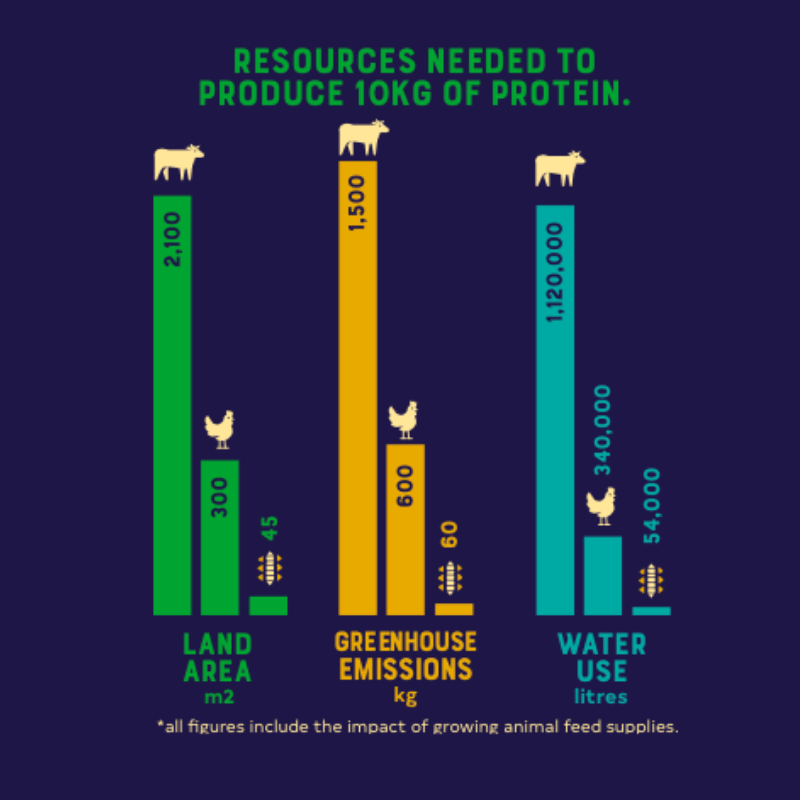
Comparison of land, emissions and water use of different foods - from Yora
3. Diet matters
The biggest chunk of your pet's 'pawprint' will come from what it eats (we're talking about cats and dogs here).
Here's some broad brushstrokes:
- Dry food tends to have a lower carbon footprint than wet food.
- 'Premium' brands using high grade cuts of meat have a higher carbon footprint.
- Chicken or fish based foods will have lower carbon footprints than beef or lamb.
- Insect based pet foods have a much lower carbon and land footprint than meat or fish based foods. I did a podcast a few years ago with the founder of Yora, an insect based food - you can listen here.
- Dogs can be fed a vegan diet, BUT NOT CATS. Cats are 'obligate carnivores' and need meat in their diets.
Further resources:
- The British Veterinary Association (BVA) have recently published the findings of their Companion Animal Feeding Working Group which looks in depth at the issues around different dietary choices, from a health, as well as a sustainability perspective. You can read the findings here.
4. Weight matters
Vets are seeing more and more overweight and obese patients, who are more prone to things like heart and joint disease, as well as diabetes. Keeping our pets at a healthy weight is better for their health and welfare, and ultimately will decrease the need for veterinary treatment, saving both money and carbon.
Monitor your pet's weight regularly and take advice from your vet on what is a healthy weight, and for weight loss advice.
5. Flea and worm treatments
20 years ago it could be difficult to eradicate flea infestations if they took hold, but all that changed with the advent of 'spot on' treatments for fleas and worms. These are much easier to apply, and much more effective than the sprays that existed previously. However there is now a growing body of evidence showing that these products are leaching into our waterways with a devastating knock on impact on aquatic ecosystems.
Evidence review from Vet Sustain
- We need to move away from the 'prophylactic' (just in case) use of these treatments and in the vast majority of cases, shouldn't be using them year round where there is no indication to.
- Speak to your vet and ask for your pet and household to be risk assessed, so that treatment is only used when needed.
- If you are using spot on treatments on your dog, ideally it shouldn't then be swimming or paddling in outdoor water sources.
- Oral treatments may result in less environmental contamination (more research is needed) but please make sure you poo pick!
Further resources:
- The evidence for environmental contamination with parasiticides in UK small animal practice (Vet Sustain)
6. Wildlife impacts
Cats and dogs can both have negative impacts for local wildlife populations.
Cats
- Playing with your cat (eg with a fishing rod toy) for 5-10minutes a day can reduce it's 'prey drive'.
- Implementing a 'curfew' and keeping them indoors from before dusk until after dawn can reduce predation.
Dogs
- Keep your dog on a lead in areas where there might be ground nesting birds present.
7. Poo bags
This could totally be it's own blog post!
- If you're putting your poo bag into a regular bin, biodegradable and compostable bags will largely behave the same way as regular plastic bags. They won't break down in landfill conditions as there isn't enough oxygen, and many local authorities send their 'residual waste' to be burnt at energy from waste plants.
- You can have a dedicated dog poo compost bin at home - in which case you need poo bags that are certified 'home compostable'. NB. You shouldn't use the resulting compost on any plants that are going to be eaten!
- Reusing plastic bags you already have (eg from bread, fruit etc) is a good option.
- Another option is poo bags with a high recycled content - I use Pet Impact ReSEAclead poo bags.
Further resources:
- Pet Impact's 'Poo Bag 101'
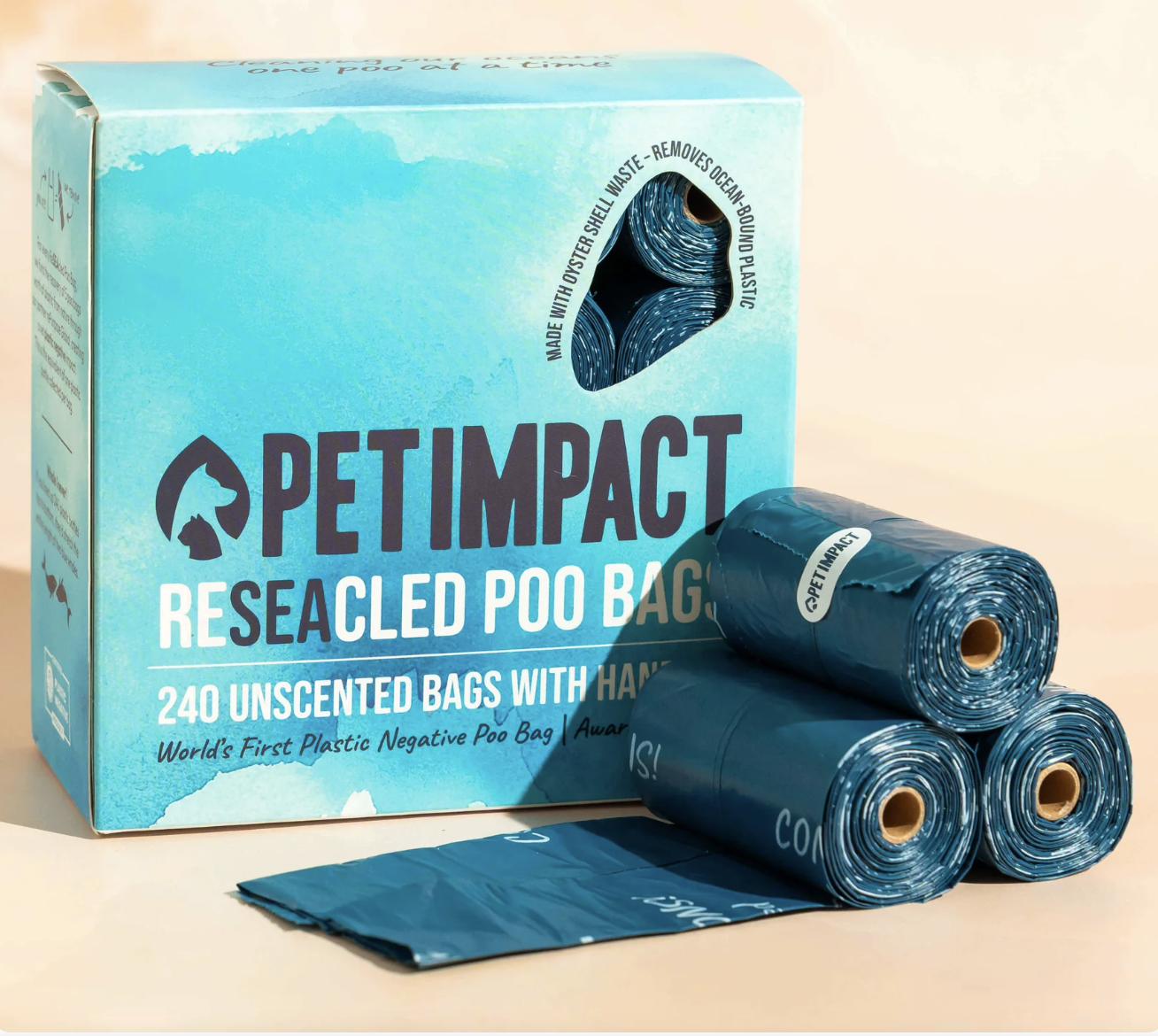
Pet Impact 'ReSEAclead' poo bags
8. 'Stuff'
Over consumption is as much of a problem in the pet world as it is for the rest of our stuff.
Your dog (and to a lesser extent perhaps, your cat!) just wants to spend time with you. It has no notion of when it's birthday is, or when Christmas is. And while of course we want to treat our pets and show them that we love them, the thing that they want most is probably a nice long walk with lots of time to sniff stuff, or to be played with. They don't need constant new toys, extra food treats put them at additional risk of weight problems, and I can almost 100% guarantee they don't want to be dressed up in a costume for your Instagram feed!
