Carbon footprints - we've probably all heard the term, but what exactly is a carbon footprint? And why does it matter?
Do I have a carbon footprint?
How do I know what it is?
How do I reduce it?
What do I need to reduce it to?
ALL the questions about carbon footprints!
Luckily in this episode I'm chatting to Jo Hand, co-founder of Giki Zero, an app and website that allows you to easily measure and track your individual carbon footprint.
Because I'm a bit of an eco geek, I've tried out a few different carbon footprint calculators, and whilst they're great for giving a ballpark figure, they don't allow for much nuance, and the only way to really see it come down is to do something really drastic, like go car-free, or move to a smaller house - neither of which are hugely practical right now.
So when I tried out Giki Zero I was geekily excited to see that this is a calculator that does allow us to factor in many of the smaller changes we're making day to day, and to see our footprint shrink!
Jo answers all of the questions above, and many many more, including sharing her top tips for the big impact things we can do to reduce our footprints.
Listen in, then go and check out Giki Zero! Let me know what your score and your footprint are!


Podcast: Play in new window | Download
[070] RECYCLING 101 WITH DENIS THE DUSTCART
Once upon a time (I'm looking at you 1990's) we were told that all we needed to do to be green was to do our recycling. And although it might have taken a while to catch on, most of us now diligently sort our rubbish out into a gazillion different bins and boxes each week, and feel good that we're doing our bit.
However, sadly we're now realising that there's much more to saving the planet than simply popping our tin cans into the right bin, and that actually even the act of recycling is in itself bloody complicated (technical term for the UK's recycling infrastructure).
One of the reasons that our recycling varies so widely across the country, is that it's managed by local councils, and many of us may have visited our council website or Facebook page for information about what we can and can't recycling where we live. But whilst we might find the information we need, we very rarely find anything else to engage us on the topic, answer some of our trickier questions, and (whispers) entertain us.
Which is why Denis the Dustcart, from Exeter City Council, is such a revelation and I was so excited to interview him. Well, not actually Denis himself. He's a dustcart. Actually, he's not even a dustcart, he's an emoji dustcart persona. So I spoke to Merrick Palmer, recycling officer at Exeter City Council and Denis' alter-ego. Who happens to be very funny, and very good well-informed (by the recycling team at the council), and very good at writing engaging posts around all things waste and recycling on the Denis the Dustcart FB page.
Make Your Money Matter
I'm a big advocate (ie I bang on a LOT about it) of the power of our choices, and for casting a vote for the kind of world we want when we SPEND our money, but it took me a long time to cotton on to the power of any money we might have in banks, savings and pensions.
According to Make My Money Matter, there's about THREE TRILLION POUNDS invested in UK pensions.
And much of it is being used to fund things like fossil fuels, arms, deforestation and more (the same applies to our savings, ISAs and current accounts). All things that I'm sure none of us would choose to fund and would be horrified to think that our money was helping these kinds of industries. Moving our money is one of THE most powerful things we can do to help fight the climate crisis.
Yes, it's a pain in the ass.
Yes, it feels horrendously grown-up.
No, that doesn't mean we shouldn't do it.

THREE SIMPLE THINGS TO DO:
- Check out how well your current bank is performing on Switch-it.
Simply find your bank on the drop down and see how well they score.
You can see the results and they click to switch and it gives you more ethical alternatives to choose from. - Send an e-mail to your pension provider asking them to get to Net Zero by 2050. There's an easy to use template and you can choose your pension provider from the drop-box on the Make My Money Matter site here.
- Sign the petition on Make My Money Matter calling on all UK pension providers to 'put people and planet on a par with profit'.
For more info on all things 'good money' check out:
Had you thought before about the power of your money?
Do you know who your pension is with? And what they're investing in?
Are you now inspired to do a spot of investigating and maybe switching?
Let me know!
[069] SAY IT WITH (BRITISH) FLOWERS WITH SARA WILLMAN
Who doesn't love a bunch of flowers?
Well.....it turns out the planet might not be too chuffed with them if you buy a bunch of imported flowers.
I don't know about you but I'd never really given much thought to the impact of flowers on the planet, other than to think that they're probably a good thing - they're natural, bees love them, what's the harm?
DID YOU KNOW?
A bunch of imported flowers from Holland or Kenya can have the equivalent carbon footprint of a flight from London to Birmingham!
Tune into this great chat with Sara Willman from My Flower Patch where she talks about the impact of flowers and how we can lower that impact (by around 90%!!) by buying British flowers.
Enjoy!


Sara Willam from My Flower Patch (pic credit Katie Spicer)
Podcast: Play in new window | Download
Useful links
- My Flower Patch
-
WHAT’S SO WRONG WITH FAST FASHION?
Let's be clear right from the very start that is not in any way a judgement of you if you buy fast fashion because money is tight.
Cheap clothes can be a lifeline and this post is NOT aimed at you. Remember that fast fashion is a part of a broken system - but even if you have to buy it/have bought it before, just because it was produced in the fast fashion system, doesn't mean you have to treat it as fast fashion. Look after it, wear it many, many times, and don't be in a rush to replace it.)
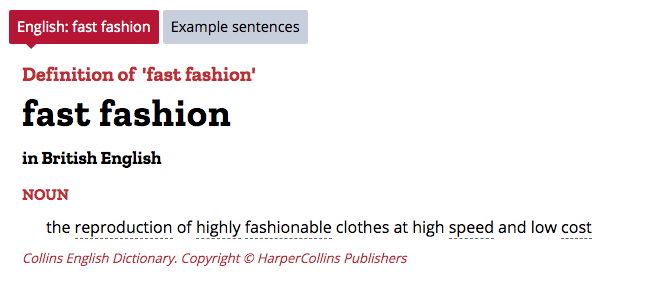
But there will be people who can afford to shop elsewhere, who can afford to make more ethical choices, but who choose not to. If that's you, then this post IS for you.
And please know that it comes from a place of compassion, concern for people and planet, and from a desire to spread the word about some of negative impacts fast fashion has on the environment and the people who make our clothes.
It's no judgement on you if you didn't know all the stats and figures I'm going to share. If you hadn't reached the point yet where you've joined the dots between your choices and people and planet.
We can't change what we don't know.
I didn't know until we spent out year buying nothing new. If you'd asked me before that point how my clothes were made, I would have said in a factory. I assumed it was all automated and done by machine.
If you'd asked me what my clothes were made from I would have said cotton, and assumed that was ok because it's a plant, and therefore natural.
But during that year (and since), I've learned that:
- The majority of our clothes are made by people, usually women (80% of garment workers are women) who are sat in often poorly lit factories in unsafe conditions, sewing the same seam on the same garments, day in, day out, hour after hour. For up to 18hours a day. For far less than the living wage they need to be able to feed their family.
- Some garment workers are children. Supply chains for the fast fashion brands are so complex and are sub-contracted so many times, that most of them wouldn't know if there was child labour being used to make their garments.
- Many of our modern clothes (especially fast fashion) are made from synthetic (oil based) fabrics. The oil needs to stay in the ground.
- It takes over 2000L of water to make one t-shirt -that's the same amount of water we drink in 3 years
- All of the above impacts on garment workers and the planet are compounded by the speed with which we in the developed world consume fashion.
- Clothing production doubled between 2002 and 2015
- Globally we consume 80 billion pieces of clothing every year
- We have enough clothing on the planet right now to clothe the next 6 generations of the human race (this is via Patrick Grant from Great British Sewing Bee)
So every time we actively choose fast fashion (if we can afford not to) that's what we're casting our vote for:
child labour, sweatshops, truckloads of garments headed to landfill every single minute.
I don't think any of us wants that.
But the problem is that's not what we're thinking about when we spot a cheap t-shirt, or we're feeling a hacked off with lockdown and want things to feel more normal again and hit the shops.
The system is broken. And that's not our fault.
But one thing we can do (if we can afford to) is decide to step out of that very unjust, unfair, damaging system by making some different choices.
Some more thoughtful choices.
And I'll be sharing with you in coming posts how you can do that.
Is your convenience and desire for a new cheap t-shirt, more important than the safety of garment workers (possibly children) and the future we're creating for our kids?
That sounds very deep, a bit worthy, and not very (ish) but it is the reality we find ourselves in. It's a hugely uncomfortable truth.
And if we CAN afford to make different choices, we owe it people and planet to do so.
What are your thoughts on fast fashion?
SHOP BETTER FOR BRITAIN! (AND THE PLANET)
As the Uk starts to emerge from covid-19 lockdown, and the High St slowly starts to open up again, our esteemed Prime Minster put out the rallying cry to “Shop for Britain”. Because apparently we can shop our way out of this crisis.
And yes, in the short term, we need the economy back on its feet. People need jobs, they need wages, to pay their bills and their mortgages, and to put food on the table.
But hold on a minute.
The coronavirus pandemic has been horrific, for those who have had the illness, those who have lost their lives to it and their families, and for those on the frontline. It’s been a very real and immediate threat.
But we have a very real, very much bigger threat ahead of us in the shape of the climate crisis, and this is one crisis that we aren’t going to be able to shop our way out of.
Let’s be clear here. I am NOT having a go at anyone who queued up to get into Primark, Sports Direct, or any other shop. I think we’re all craving a bit of normality, and for some, shopping at their favourite stores will give them that much needed sense that things are getting back to normal. That the worst is over. Maybe some people genuinely needed new clothes if their kids had grown over lockdown or for other reasons.
But we’re at a crossroads. A crossroads where get to choose the future we want for our kids and future generations. That is the reality of where we are.
We can choose to continue to consume at the same rate. Often quite unconsciously, without a huge amount of thought. If we’ve got Amazon Prime we can get pretty much whatever we want, next day! AND free delivery! What on earth could be wrong with that?
Well….quite a lot actually, so I’m glad you asked.
We live on a planet of finite resources and we’re very quickly running out.
We live on a planet whose ecosystems have developed over millennia to the finely tuned balance they are in, and we’re fucking them up (technical term).
We live on a planet of infinite beauty and wonder and awe.
And it’s not our planet.
We live in a system that demands infinite growth on a planet with finite resources.
We live in a system that puts profit above all else.
We live in a system that is killing the very planet we live on.
We live in a society that tells us more is better. Bigger is better.
We live in a society where convenience is King.
We live in a society where our desire for a cheap t-shirt is somehow more important than the basic safety of the people in some godforsaken factory making those clothes.
We live in a country, and at a point in history, where our own Prime Minister, and the front pages of all the newspapers, are telling us it is our civic duty to get out and buy stuff.
Even if we don’t need it.
Because we’ve got to keep the wheels turning. That is the goal, above all else.
The priority, rightly or wrongly, for the government, is the economy.
And yes, as I’ve already said, people need jobs. Of course they do.
But we’ve seen very clearly over the past few months that the government will move heaven and earth to protect the economy. I have no idea how many billions have been spent on the furlough scheme (very rightly so).
But we can keep the wheels turning, we can support the economy, we can help to provide jobs, in many different ways. And we can do it without giving our money to companies whose business models have a hugely deleterious effect on the planet and the people in their supply chains.
When we spend money we cast a vote for the kind of world we want.
If we’re in the privileged position where our buying decisions aren’t governed solely by our financial situation (and I fully acknowledge that is very much not the case for a lot of people) then as I see it, we have a responsibility to get informed and to make better decisions about where we spend our money, more of the time.
I’m not asking for perfection (I’m far from perfect myself). We’ll all have times when we make a decision based on convenience, or on price, or on something else other than the planet.
What I am asking for is that you give your buying decisions some thought. Even if you then end up buying the same thing, you’ve considered other options, weighed up the pros and cons. Taken the planet into account.
You haven’t bought just because Boris told you to.
Would love to hear your thoughts on this too - do comment below
[066] – MEAL PLANNING MAGIC, OR HOW TO MAKE THE FOOD YOU’VE GOT GO FURTHER WITH ANN FROM STORR CUPBOARD
Well.... What can I say?
We are living in unprecedented times - it feels surreal, scary, overwhelming, all of the emotions. And this is going out the day after the UK government announced that schools will be closed until further notice.
I'm not going to dwell here on the c-word - I think we're all probably getting about as much as we can take right now, so how about a coronavirus free hour?
In today's episode I'm chatting to Ann Storr, from the Storr Cupboard (do you see what she's done there? I do love a play on words) all about food waste. And specifically how to use meal planning to reduce it. We recorded this episode many moons (a few weeks) ago, and there isn't even a mention of the c-word (yay!) but listening back to it in the context of current events, it's actually a really timely episode. With pictures on social media of supermarket shelves stripped bare, we're all starting to think about food in a slightly different way - instead of seeing it as this plentiful and never-ending resource, some people are, for possibly the first time, really waking up to the idea that they need to make the very most out of every scrap of food in the house.
With regards to the climate crisis, food waste is a huge issue, and c-word or not, we all need to get better at using up the food we buy. Listen in for some brilliant tips around meal planning, food storage, and clever ideas around using up leftovers, and then head on over to Ann's website to check out all the brilliant resources she has on offer there.
Stay safe and well and sane(ish), wherever you are.
Enjoy.

Podcast: Play in new window | Download
Useful links
- Storr Cupboard
-
[065] ‘PERIODICAL’ WITH LAUREN FROM WEAR ‘EM OUT PADS
Yay! The podcast is BACK for series FOUR!!
I intended to only take a short break in the New Year and now suddenly it's March - I'd like to say I have no idea how that happened, but the reality is that it turns out launching a book into the world is quite time consuming, and as ever I massively over-estimated what I'd be able to get done each day...!
Right then, this week's podcast is with the wonderful Lauren Derrett, founder of Wear 'em Out, a new brand of reusable pad.
We chat all things periods, obviously, but also lots of chat around taking the plunge and starting your own product based business, some of the barriers in the way of 'green living' and why lots of us might not necessarily resonate with, or aspire to 'green living' stereotypes.
We recorded this episode way back in October last year, when Lauren had a brand, prototype pads and some great feedback from testers but was waiting for the first delivery of pads. Since that time, their first order arrived, the website crashed with the demand, they sold out, re-stocked and haves sold out again! Lauren posted today on Instagram that they've had 542 orders so far, meaning that over the next three years, 429,264 disposable pads will be saved from landfill (based on the average use of 22 pads per cycle).
WOW!! This is where we quickly and easily see impact of individual action, collectively.
Quick word of warning that Lauren is a self-confessed 'potty mouth' and I think drops the 'f-bomb' at one point - my suggestion would be not to listen to this one with the kids in earshot, or if you're not a fan of the odd expletive, to give this one a miss (although you'll be missing out on a great episode!).
Enjoy!!


Podcast: Play in new window | Download
Useful links
- Wear 'em Out
-
12 DAYS OF SUSTAINABLE(ISH) – DAY 2 – ZERO WASTE(ISH)
It is with HUGE excitement that I bring you this very special mini-series of the Sustainable(ish) podcast to celebrate, and to count down to, the launch of The Sustainable(ish) Living Guide - everything you need to know to make small changes that make a big difference.
This book is pretty much the distillation of the Sustainable(ish) ethos and is being published by Bloomsbury on January 9th 2020 , and to mark such an auspicious occasion I've put together 12 shortish episodes of the podcast, one for each chapter of the book, where I have a good old chinwag with someone relevant to that chapter.
Today we're onto Day 2, and Chapter 2, which is Zero waste(ish), and I am chatting to my lovely internet friend Lindsay Miles from Treading My Own Path. Lindsay is pretty hot on the zero waste front (whereas I’m pretty hot on the ish bit..!) but manages to do it without making the rest of us feel a bit shit, and to still make it feel do-able.
In the book I talk about the IG ideal of the years worth of waste in a jam jar and how intimidating I find that, and I love the bit in our chat where Lindsay talks about the fact that it’s not about the jam jar, it’s about doing what you can with the resources you’ve got. While I think many of us might find the concept of zero waste a bit (a lot!) off putting, I think we can all hopefully sign up to that.
Enjoy!

Podcast: Play in new window | Download
Useful links
- Treading My Own Path
-
12 DAYS OF SUSTAINABLE(ISH) – DAY 1 – CONSCIOUS CONSUMPTION
OMG OMG OMG OMG OMG....!
It is with HUGE excitement that I bring you this very special mini-series of the Sustainable(ish) podcast to celebrate, and to count down to, the launch of The Sustainable(ish) Living Guide - everything you need to know to make small changes that make a big difference.
This book is pretty much the distillation of the Sustainable(ish) ethos and is being published by Bloomsbury on January 9th 2020 , and to mark such an auspicious occasion I've put together 12 shortish episodes of the podcast, one for each chapter of the book, where I have a good old chinwag with someone relevant to that chapter.
Today we're kicking off with Day 1, and Chapter 1, which is conscious consumption, and I am SO delighted to get the chance to chat to Sarah Lazarovic, author, illustrator, and creative about her wonderful creation, The Buyerarchy of Needs, which features very heavily in Chapter 1 of The Sustainable(ish) Living Guide. We talk about Sarah's own book,